


Lithium Battery Powersports Conversion: 2026 Guide
Lithium battery powersports conversion is the process of replacing a traditional lead-acid battery with a lithium iron phosphate (LiFePO4) unit to cut weight, extend service life, and sharpen vehicle performance. The industry term for this upgrade is a LiFePO4 drop-in conversion, and it applies to motorcycles, ATVs, UTVs, and side-by-sides alike. LiFePO4 batteries reduce weight by 60% to 75% compared to lead-acid units and last 8–10 times longer. That combination of savings makes this one of the highest-return upgrades a powersports enthusiast can make in 2026.
What lithium batteries are best suited for powersports conversions?
Not every lithium battery belongs in a powersports application. The chemistry and cell format matter as much as the voltage rating.
LiFePO4 is the correct chemistry for powersports use. It delivers stable voltage under load, tolerates deep discharge better than other lithium chemistries, and does not thermal-run the way older lithium-cobalt cells can. For a lithium battery for ATV or motorcycle use, LiFePO4 is the only chemistry worth considering.
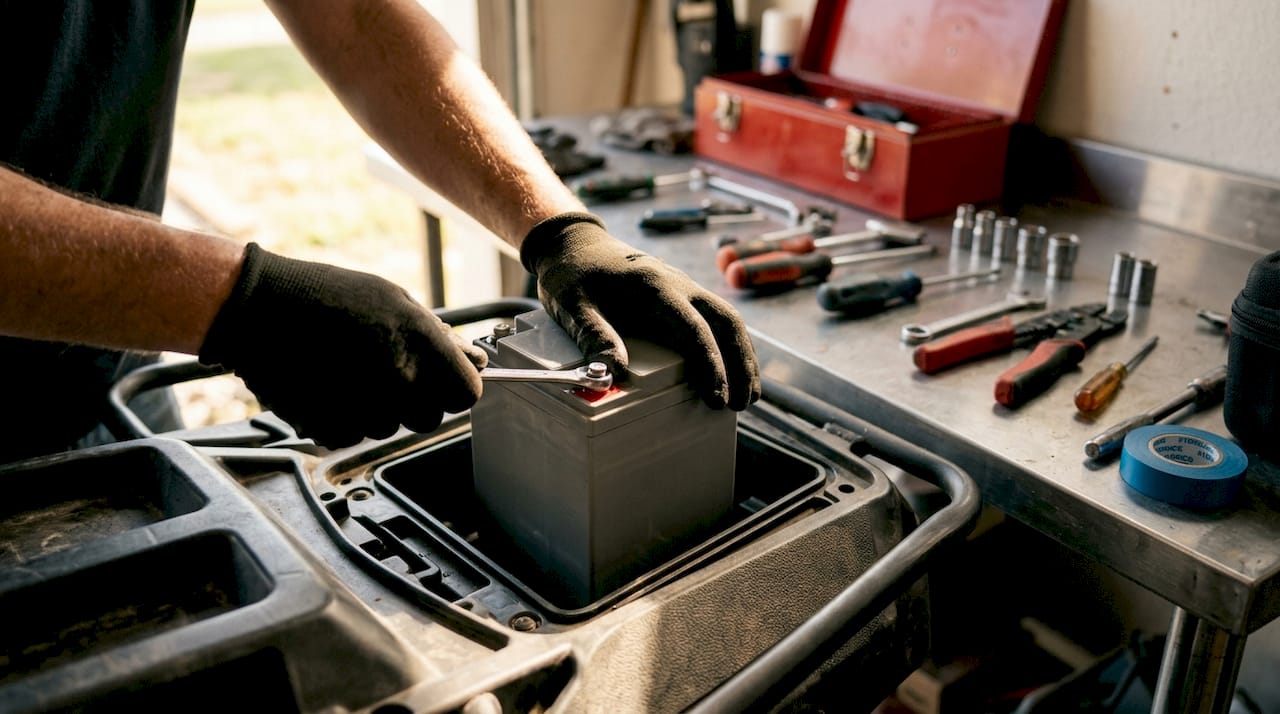
Cell format: prismatic vs. cylindrical
Prismatic LiFePO4 cells outperform cylindrical power-tool cells in powersports environments. Cylindrical cells are designed for power tools, not for the sustained vibration of a trail ride or a track day. Prismatic cells handle that vibration without internal damage, which translates directly into longer service life on rough terrain.
Battery management system requirements
Every quality powersports lithium battery includes an integrated Battery Management System, or BMS. The BMS handles cell balancing, over-charge protection, over-discharge protection, and thermal cutoff. Advanced 2026 units also include RE-START sleep mode technology. RE-START preserves a small energy reserve so you can manually restart the vehicle with a button press after a full discharge. That feature alone eliminates the most common complaint about lithium batteries in powersports: the dead-battery-no-warning scenario.
Key features to confirm before buying:
- Cell format: prismatic LiFePO4, not cylindrical
- BMS functions: cell balancing, over-charge, over-discharge, and thermal protection
- RE-START technology: manual restart capability after full discharge
- Cranking amps: match or exceed your OEM spec
- Physical dimensions: must fit the existing battery tray without modification
- Terminal type and polarity: confirm left-positive or right-positive orientation
Pro Tip: Cross-reference your OEM battery’s cold cranking amp (CCA) rating before buying. A lithium unit with lower CCA than your lead-acid battery will struggle to start a high-compression engine in cold weather.
How to prepare your powersports vehicle for a lithium upgrade
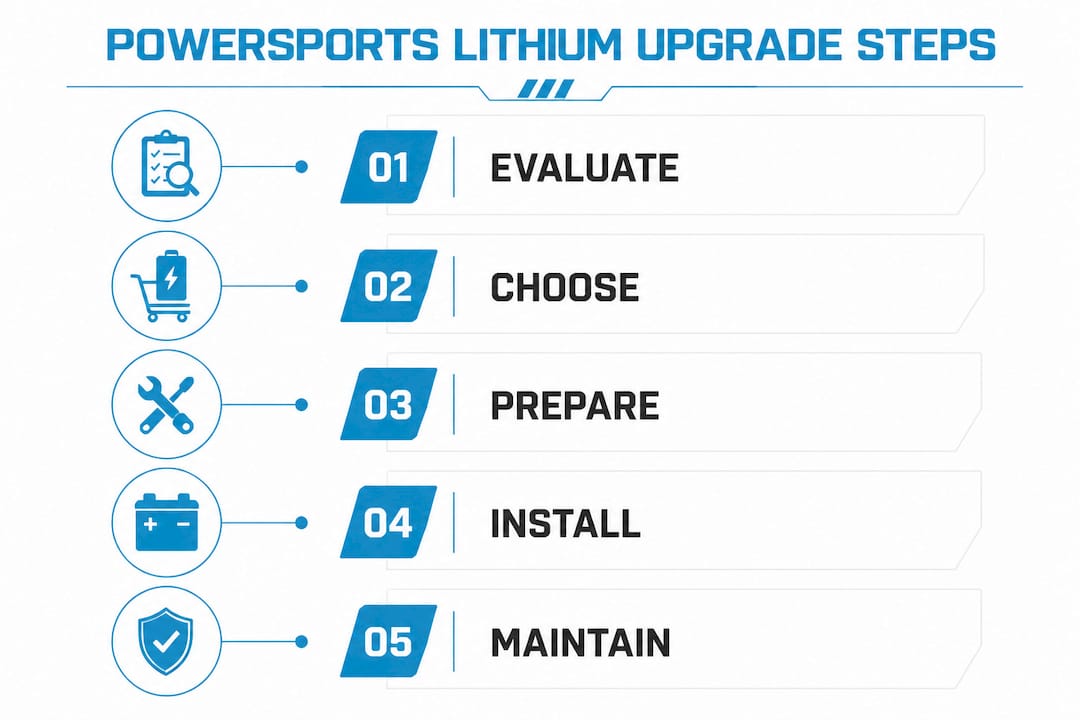
Preparation prevents the most common conversion failures. Skipping this step is how riders end up with a damaged BMS or a battery that never charges correctly.
Check your charging system first
Your vehicle’s charging system must produce 13.6V to 14.4V at approximately 2,000 RPM for reliable lithium battery charging. A failing stator or a worn regulator-rectifier that pushes voltage above 14.8V will damage a lithium BMS faster than it would damage a lead-acid battery. Test output voltage with a multimeter before you buy anything.
Measure and document everything
- Measure the existing battery’s length, width, and height in millimeters.
- Note the terminal polarity: which post is positive and which is negative, and which side each sits on.
- Photograph the wiring before disconnecting anything.
- Check for accessories like alarms, GPS trackers, or heated grips that create a continuous parasitic draw.
- Identify the battery tray material and mounting hardware so you can source replacements if needed.
Parasitic draws are a specific concern with lithium batteries. Continuous draws from alarms or immobilizers drain a lithium battery below its safe threshold faster than they drain lead-acid, because lithium batteries have a much lower self-discharge rate and the BMS will cut off the cell before damage occurs. Know what is drawing power before you install the new battery.
For UTV owners, the UTV battery upgrade guide from Bansheebatteries covers electrical compatibility and fitment in detail.
Before touching any terminal, disconnect the negative cable first and reconnect it last. Lithium batteries store energy at full charge from the factory. A short circuit during installation can damage the BMS instantly and void your warranty.
How do you convert your powersports vehicle to a lithium battery?
A clean, methodical installation protects both the battery and your vehicle’s electrical system. Follow these steps in order.
-
Disconnect the old battery. Remove the negative terminal first, then the positive. Lift the lead-acid battery straight out. These units are heavy, so use both hands and set it on a stable surface.
-
Inspect the battery compartment. Look for corrosion on the tray, cracked plastic, or loose mounting hardware. Clean any corrosion with a baking soda and water solution, then dry the area completely before proceeding.
-
Clean the terminals. Use a wire brush or terminal cleaning tool on both cable ends. Green or white buildup on terminals increases resistance and causes starting problems that get blamed on the new battery.
-
Place the lithium battery in the tray. Confirm the positive terminal aligns with the positive cable. Improper mounting and weight distribution can shift the center of gravity on larger vehicles, so use the original mounting hardware and tray whenever possible. For large EV conversions, bespoke mounting plates that maintain the original battery footprint preserve chassis balance.
-
Connect the positive terminal first, then the negative. Tighten both terminals firmly. A loose terminal causes voltage drop and intermittent starting failures.
-
Charge the battery before first use. Use a lithium-compatible charger to bring the battery to full charge. Do not use a standard lead-acid charger for this step.
-
Run post-installation checks. Start the vehicle and measure charging voltage at the battery terminals at 2,000 RPM. Confirm the reading falls between 13.6V and 14.4V. Test all accessories to confirm normal operation.
Pro Tip: If your vehicle has a RE-START-equipped battery, press the RE-START button before the first start attempt. This wakes the BMS from its factory sleep mode and confirms the feature is active.
Troubleshooting and maintenance after your powersports lithium upgrade
Most post-conversion problems trace back to one of three causes: the wrong charger, a parasitic draw, or cold-weather operation. Knowing which one applies saves time and money.
Common issues and fixes
- Battery won’t charge after sitting: A lithium BMS enters a protection state when voltage drops too low. Use a lithium-specific charger with a recovery mode, or press the RE-START button if your battery has one.
- Slow cranking in cold weather: LiFePO4 chemistry loses cranking power below freezing. Ride the vehicle for five minutes before demanding a hard start in temperatures below 32°F. The battery warms itself during light use and recovers full output.
- Charger shows error or won’t complete a cycle: Lead-acid trickle chargers with desulfation or pulse modes can permanently damage a lithium BMS. Replace the charger with a lithium-specific unit immediately.
- Battery drains during storage: Identify and eliminate the parasitic draw. If the draw cannot be removed, disconnect the negative terminal during storage.
Long-term maintenance tips
LiFePO4 batteries have a very low self-discharge rate, which means they hold a charge for up to 12 months without a top-up if no parasitic draws exist. That said, charging the battery every three to four months during a long storage period extends cycle life. Store the battery at 50%–80% charge in a cool, dry location, not at 100%.
Remote RE-START accessories connect via an SAE pigtail and mount in an accessible location outside the battery compartment. These are worth adding when the battery sits under a seat or behind panels that require tools to remove. The accessory lets you trigger the RE-START function without pulling the bike apart on the side of a trail.
For detailed storage protocols, the Bansheebatteries guide on storing LiFePO4 batteries covers temperature ranges, charge levels, and seasonal prep in full.
Pairing your lithium battery with a vehicle monitoring setup gives you real-time visibility into electrical system health, which is especially useful for UTVs and side-by-sides with complex accessory loads.
Key Takeaways
A successful powersports lithium upgrade depends on choosing the right LiFePO4 chemistry, verifying your charging system, and using a lithium-specific charger from day one.
| Point | Details |
|---|---|
| Choose prismatic LiFePO4 cells | Prismatic cells resist vibration better than cylindrical cells in powersports environments. |
| Verify charging voltage first | Your system must output 13.6V–14.4V at 2,000 RPM before installing a lithium battery. |
| Use a lithium-specific charger | Lead-acid chargers with desulfation modes permanently damage lithium BMS circuits. |
| Address parasitic draws before installing | Continuous electrical draws deplete lithium batteries faster and trigger BMS protection cutoffs. |
| Add RE-START or remote accessories | RE-START technology and SAE pigtail accessories prevent dead-battery lockouts on the trail. |
Why I think most riders underestimate this upgrade
Most powersports enthusiasts treat a battery swap as a five-minute job. A lithium conversion is not that. It is a small electrical system audit wrapped around a battery replacement, and the riders who skip the audit are the ones posting complaints online three months later.
The weight savings are real and they are immediately noticeable. Dropping 60%–75% of battery weight from a motorcycle or ATV changes how the vehicle feels in tight corners and on technical terrain. That is not marketing copy. It is physics.
The part most guides skip is the charger conversation. I have seen riders spend good money on a quality LiFePO4 battery and then plug in the same lead-acid tender they have used for years. The desulfation pulse destroys the BMS quietly, and the battery appears to work fine until it does not. Buy the right charger at the same time you buy the battery. It is not optional.
The AGM vs. LiFePO4 comparison from Bansheebatteries is the clearest breakdown I have seen of what you actually gain and give up with each chemistry. Read it before you decide. For most riders in 2026, LiFePO4 wins on every metric that matters on the trail.
— Donald
Bansheebatteries lithium powersports batteries worth knowing about
Bansheebatteries has built its lithium powersports lineup around the same LiFePO4 chemistry and BMS standards covered in this guide. Every unit ships with a 5-year warranty on lithium marine batteries and full customer support for fitment questions.
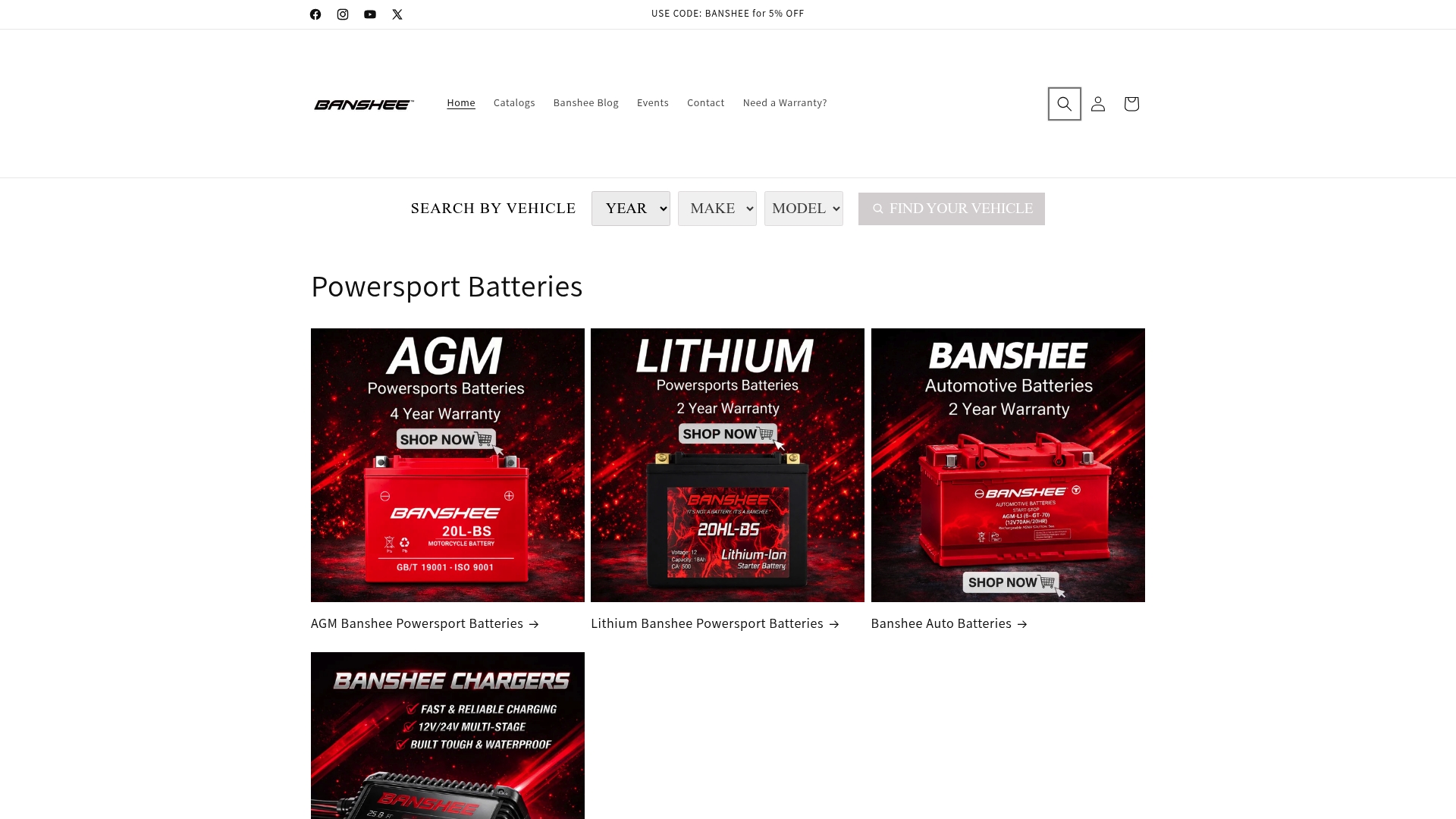
The lithium powersports battery collection covers motorcycles, ATVs, UTVs, and side-by-sides, with options sized to match OEM battery trays directly. Bansheebatteries also carries a dedicated lithium battery charger built for LiFePO4 chemistry, which eliminates the charger compatibility risk entirely. If you are ready to convert, start with the battery collection and use the fitment guide to confirm your match.
FAQ
What is a LiFePO4 powersports conversion?
A LiFePO4 powersports conversion replaces a lead-acid battery with a lithium iron phosphate unit to reduce weight, extend battery life, and improve starting performance. LiFePO4 is the standard chemistry for this upgrade because of its safety, stability, and vibration resistance.
How long do lithium powersports batteries last?
LiFePO4 powersports batteries last 8–10 times longer than lead-acid batteries and can hold a charge for up to 12 months without a top-up when no parasitic draws are present.
Can I use my existing charger after converting to lithium?
No. Lead-acid chargers with desulfation or pulse modes damage lithium BMS circuits. Use a charger designed specifically for LiFePO4 chemistry after converting.
Do lithium batteries work in cold weather?
LiFePO4 batteries lose cranking power below 32°F but recover full output after a few minutes of light use. Warming the battery with a short ride before a hard cold start resolves most cold-weather starting issues.
What is RE-START technology in a lithium battery?
RE-START is a BMS feature that reserves a small energy buffer after a full discharge. Pressing the RE-START button wakes the battery and provides enough power to restart the vehicle without a jump-start or battery removal.