


UTV Battery Upgrade Considerations: A Practical Guide
UTV battery upgrade considerations cover four core decisions: battery chemistry, power specifications, physical fitment, and charging compatibility. Get all four right, and your machine starts reliably in any condition, powers every accessory you run, and holds up through seasons of hard use. Miss one, and you risk a dead battery on the trail, a failed installation, or a shortened battery life. This guide walks you through each factor in plain terms, with specific numbers and real tradeoffs, so you can make a confident choice before you buy.
1. What battery types are best suited for UTV upgrades?
Three battery chemistries dominate UTV upgrades: flooded lead-acid, AGM, and lithium iron phosphate (LiFePO4). Each serves a different rider profile.
Flooded lead-acid batteries are the oldest and cheapest option. They require regular water top-offs, vent hydrogen gas, and suffer in high-vibration environments. For most UTV owners doing serious off-road riding, they are the wrong starting point.

AGM batteries are sealed, spill-proof, and built to handle the constant vibration of trail riding. They cost more than flooded batteries but significantly less than lithium. AGM provides excellent vibration resistance at a lower upfront cost, making them the go-to choice for recreational riders who want all-weather reliability without a premium price tag.
Lithium (LiFePO4) batteries are the performance choice. They weigh far less than lead-acid alternatives, often under one-third the weight of a comparable flooded battery. That weight reduction improves vehicle handling and makes installation easier. Lithium batteries cost 2–3 times more upfront than AGM, but they deliver more charge cycles and hold voltage more consistently under load.
The quality of the Battery Management System (BMS) separates good lithium batteries from bad ones. High-quality BMS units actively balance cells during charging and discharging to prevent premature failure. Cheap BMS units fail under high-current loads like winches. When you buy a lithium battery, the BMS is not a secondary feature. It is the battery’s brain.
- Flooded lead-acid: lowest cost, highest maintenance, poor vibration tolerance
- AGM: sealed, vibration-resistant, reliable in all weather, mid-range cost
- LiFePO4: lightest weight, longest cycle life, requires lithium-specific charger, highest upfront cost
Pro Tip: If you run a winch, light bar, or heated accessories, lithium with a premium BMS is worth the extra cost. The BMS protects against the high-current spikes those accessories create.
2. How to determine the right power specs: CCA, Ah, and accessory load
Cold Cranking Amps (CCA) measures how much current a battery can deliver for 30 seconds at 0°F without dropping below a minimum voltage. It is the single most important number for reliable starting, especially in cold weather or with a large engine.
Experts recommend 300–400 CCA for standard UTVs. If you run a winch, have a larger engine, or ride in cold climates, you need 700 CCA or more to guarantee reliable starts. That gap matters. A battery that barely meets the minimum CCA will struggle on a cold morning or after sitting for a week.
Amp-hour (Ah) capacity measures how long a battery can sustain a given current draw. It matters most when you run accessories with the engine off, such as a stereo, lights, or a GPS unit. A higher Ah rating gives you more reserve time before the battery drains.
Key power specification checkpoints:
- Match or exceed your OEM’s CCA rating as a baseline
- Add CCA headroom if you run a winch or ride below freezing
- Calculate your accessory load in amps and match Ah capacity accordingly
- Confirm your charging system can fully recharge the battery you choose
Larger batteries with higher Ah capacity support sustained accessory use, but you must confirm physical tray size and terminal compatibility before buying. Oversizing without checking fit causes installation failures and can stress your charging system. More capacity is not always better. It has to fit and work within your vehicle’s electrical limits.
3. What physical fit and mounting considerations should UTV owners know?
Battery dimensions and terminal position are non-negotiable. A battery that does not fit the tray or align with the cables cannot be installed safely, regardless of its specs.
Measure your existing battery compartment in three dimensions: length, width, and height. Then check the terminal position. Positive and negative terminals must align with your existing cable connectors without forcing or extending wires. Many lithium batteries offer adapter terminals or multi-terminal configurations, which adds flexibility when swapping from lead-acid to lithium.
Mounting security is just as critical as dimensions. Vibration and poor hold-down hardware cause battery and electrical connection failures on the trail. A battery that shifts in its tray will wear its terminals, loosen connections, and fail early. This is one of the most common and preventable upgrade mistakes.
Pro Tip: Inspect your hold-down bracket and hardware during every battery swap. A generic bracket that fit your old battery may not secure a new one with different dimensions. Replace it if there is any play.
Physical fitment checklist:
- Measure tray length, width, and height before ordering
- Confirm terminal position matches cable reach without modification
- Check that the hold-down bracket fits the new battery’s footprint
- Inspect all cable connectors for corrosion or wear during installation
- Verify the battery sits flush with no rocking or shifting
Battery terminal corrosion is a silent killer of electrical connections. Clean terminals before installing any new battery, and apply a protective spray or grease to prevent future buildup.
4. How charging system compatibility and maintenance affect upgrade success
Charging compatibility is the step most UTV owners skip, and it causes the most expensive mistakes. Lithium batteries require lithium-specific chargers. Using an incompatible charger damages the BMS and shortens battery life. A standard AGM charger will not charge a lithium battery correctly, and in some cases, it will trigger the BMS protection circuit and refuse to charge at all.
AGM batteries are more forgiving but still benefit from a smart charger that adjusts voltage based on battery state. A dumb trickle charger can overcharge an AGM battery during long storage, causing internal damage.
Safe battery removal and installation steps:
- Turn off the vehicle and remove the key
- Disconnect the negative terminal first to prevent short circuits
- Disconnect the positive terminal second
- Remove the hold-down hardware and lift out the battery
- Install the new battery and connect the positive terminal first
- Connect the negative terminal last and secure the hold-down
Disconnecting the negative terminal first is the standard safety rule for all battery work. Reversing the sequence risks sparks, short circuits, and potential fire. Reconnect in reverse order: positive first, then negative.
Seasonal storage is where many batteries die unnecessarily. Keeping a battery on a smart maintainer during storage prevents sulfation, which is the buildup of lead sulfate crystals that permanently reduces capacity in AGM batteries. A quality smart maintainer compatible with your battery chemistry costs far less than a replacement battery.
Pro Tip: Before winter storage, fully charge your battery, connect a smart maintainer, and store the UTV in a space above freezing. A lithium battery can tolerate cold storage better than AGM, but neither should be stored discharged.
Additional maintenance practices that extend battery life:
- Check terminal tightness every few months
- Clean any corrosion with a baking soda and water solution
- Test battery voltage with a multimeter before each riding season
- Replace a battery that consistently reads below 12.4V at rest
5. What situational recommendations optimize UTV battery upgrades?
The right battery depends on how you ride, what you run, and what you are willing to spend. There is no single answer, but there are clear patterns based on use case.
Recreational riders who use their UTV for weekend trail rides, hunting, or farm work get the most value from AGM. The AGM chemistry delivers all-weather reliability without the charger requirements or upfront cost of lithium. A quality AGM battery from a reputable manufacturer with a strong warranty covers most recreational needs.
Performance and sport riders who run winches, light bars, GPS units, and stereos, or who ride in cold climates regularly, benefit most from lithium. The weight savings improve handling, and the higher cycle count means fewer replacements over time. The upfront cost is higher, but the total cost of ownership over several years often favors lithium.
Upgrade decision checklist:
- What is your primary use: recreational, sport, or work?
- Do you run high-draw accessories like a winch or light bar?
- Do you ride in temperatures below 20°F regularly?
- What is your budget for the battery and the compatible charger?
- Does your current tray and cable setup accommodate the new battery’s dimensions?
One common pitfall is buying a battery based on price alone. Investing in a high-quality BMS-equipped lithium battery protects against the failure modes most common in off-road use. A cheap battery with a weak BMS will fail under a winch load at the worst possible moment.
For cold-climate riders, winterizing your electrical system before the season starts reduces the risk of starting failures and battery damage. That means checking CCA ratings, inspecting terminals, and confirming your charger is set for the correct chemistry.
Key Takeaways
Upgrading a UTV battery successfully requires matching battery chemistry, CCA rating, physical dimensions, and charger compatibility to your specific vehicle and riding conditions.
| Point | Details |
|---|---|
| Choose chemistry by use case | AGM suits recreational riders; lithium suits performance riders with high accessory loads. |
| Match CCA to your engine and climate | Use 300–400 CCA for standard UTVs and 700+ CCA for winches, large engines, or cold climates. |
| Confirm physical fit before buying | Measure tray dimensions and terminal position to avoid installation failures. |
| Use the correct charger | Lithium batteries require lithium-specific chargers to protect the BMS and preserve battery life. |
| Maintain during storage | Connect a smart maintainer during off-season storage to prevent sulfation and capacity loss. |
What I’ve learned from watching UTV battery upgrades go wrong
Most battery upgrade mistakes happen before the new battery arrives. Riders pick a battery based on price or brand recognition, skip the fitment check, and then discover the terminals face the wrong direction or the tray is 2 inches too short. That is a frustrating and avoidable problem.
The second most common mistake is ignoring the charger. I have seen lithium batteries fail within a season because the owner used an old AGM charger. The BMS protection circuit trips repeatedly, the battery never reaches full charge, and the owner assumes the battery is defective. The charger was the problem.
What I tell every UTV owner is this: the battery is a system, not a standalone part. It connects to your charging system, your cables, your tray, and your accessories. Every one of those connections has to be right. A great battery in a loose tray with a corroded terminal and the wrong charger will underperform every time.
The AGM vs. LiFePO4 decision is real, but it is not the hardest part. The hard part is doing the fitment homework, buying the right charger, and committing to basic maintenance. Those three habits will extend any quality battery’s life by years.
— Donald
Bansheebatteries has the right battery for your UTV
Bansheebatteries has spent over 20 years building AGM and lithium batteries for powersports riders who need power that holds up in real conditions. Their AGM lineup covers the full range of UTV applications with vibration-resistant construction and a 4-year warranty. Their lithium options include advanced BMS protection built for high-draw accessories and demanding off-road use.
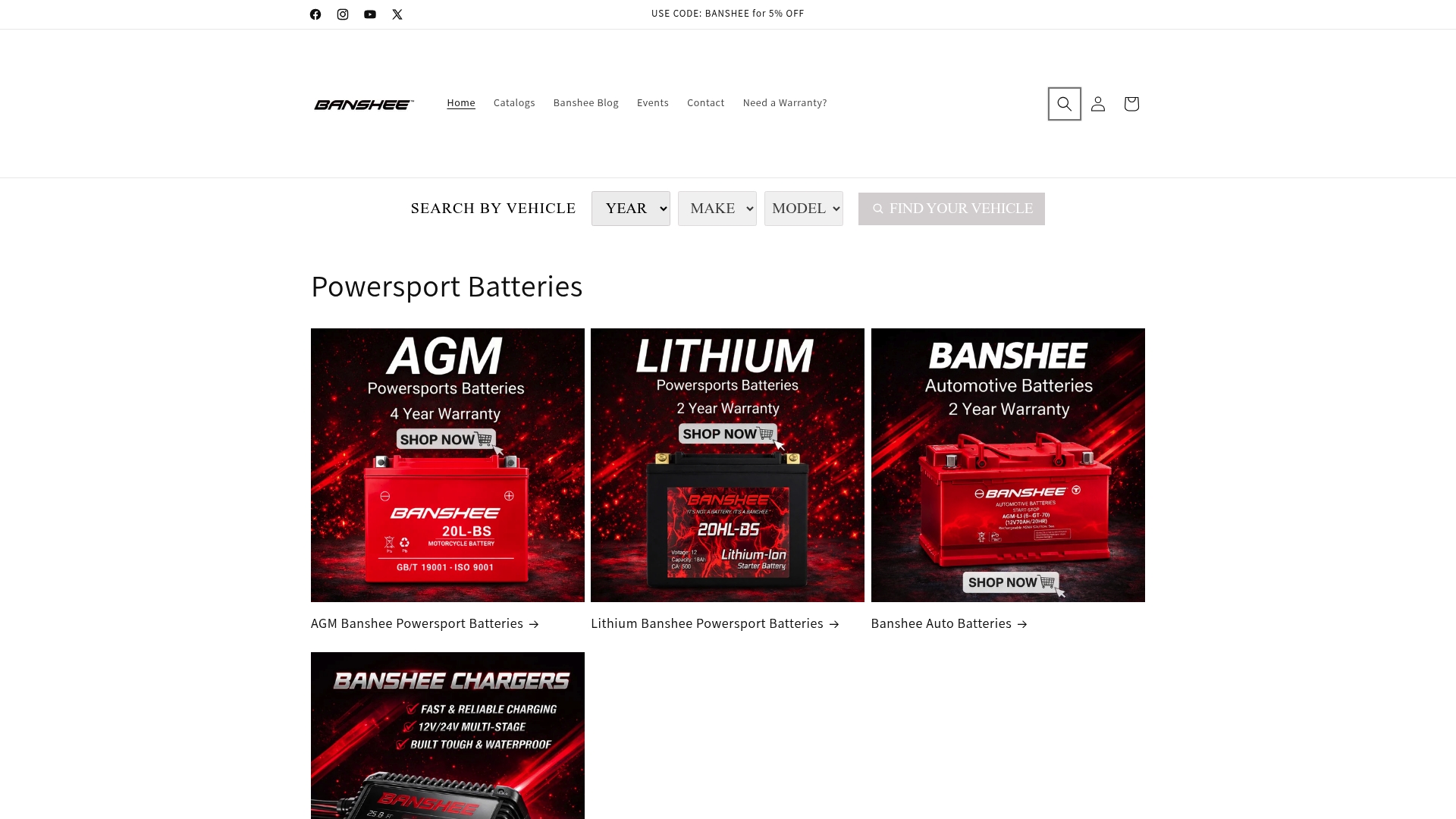
If you are upgrading to lithium, the Bansheebatteries lithium powersport lineup includes options with proven BMS performance and cold-weather reliability. For recreational riders who want a dependable AGM at a fair price, the AGM powersport collection covers most UTV fitments with all-weather durability. Not sure which fits your machine? Bansheebatteries’ team can match you to the right battery based on your vehicle, accessories, and riding conditions.
FAQ
What is the minimum CCA for a UTV battery upgrade?
Most standard UTVs need at least 300–400 CCA for reliable starting. UTVs with winches, larger engines, or cold-climate use require 700 CCA or more.
Can I use an AGM charger on a lithium UTV battery?
No. Lithium batteries require a lithium-specific charger. Using an AGM charger can damage the Battery Management System and reduce battery lifespan significantly.
How do I know if a replacement battery will physically fit my UTV?
Measure your battery tray’s length, width, and height, then confirm the terminal position matches your existing cables. Many lithium batteries include adapter terminals for added flexibility.
How should I store my UTV battery during the off-season?
Connect the battery to a smart maintainer compatible with its chemistry. This prevents sulfation in AGM batteries and keeps lithium batteries at a safe charge level through storage.
Is a lithium battery worth the higher cost for a UTV?
For riders running high-draw accessories or riding in cold climates, yes. Lithium batteries offer longer cycle life, significant weight savings, and more consistent voltage under load, which lowers total cost over time.