


Why Your Motorcycle Needs a Specific Battery
A motorcycle needs a specific battery because its electrical demands, physical constraints, and operating conditions are fundamentally different from those of a car. Standard automotive batteries are too large, too heavy, and built for a completely different power profile. The right motorcycle battery selection depends on Cold Cranking Amps (CCA), chemistry type, physical dimensions, and vibration resistance. Get any one of those wrong, and you risk starting failures, electrical instability, and a shortened battery life. This guide covers every factor that makes compatible motorcycle batteries a non-negotiable choice.
Why motorcycle needs a specific battery: the core differences from car batteries
Motorcycle batteries are built for a completely different job than car batteries. Motorcycle batteries typically range from 5–30 Ah, while car batteries run from 40–100 Ah. That gap reflects the much smaller electrical load a motorcycle carries compared to a car with climate control, power windows, and a larger engine.
Physical design is just as important as capacity. Motorcycle batteries feature enhanced internal bracing and plate supports to handle the constant vibration from road surfaces and engine operation. Car batteries lack this reinforcement because they sit in a stable, cushioned engine bay. On a motorcycle, a battery without proper vibration resistance will crack internally and fail early.
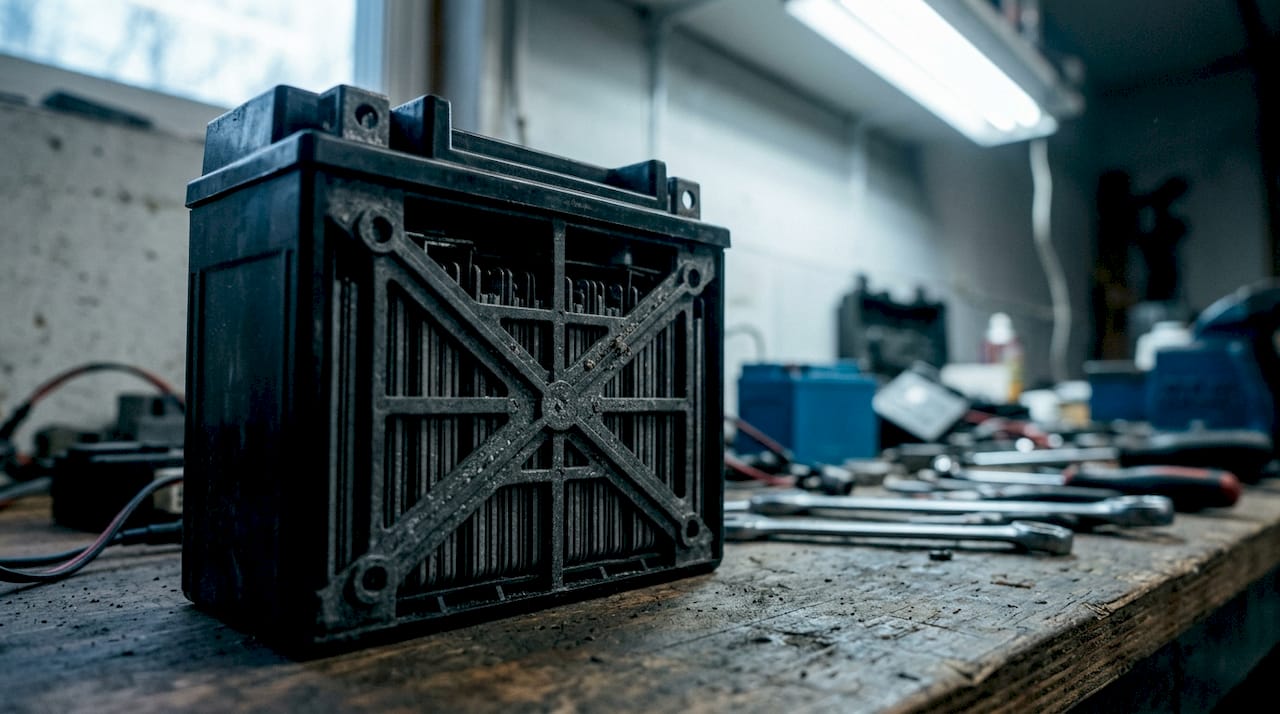
Weight also matters in a way it simply does not for cars. Every pound on a motorcycle affects handling, acceleration, and rider feel. A battery that is even slightly oversized can shift the bike’s balance. This is why motorcycle battery selection requires matching the exact group size specified by the manufacturer, not just finding something that fits in the compartment.
Key differences at a glance
| Feature | Motorcycle battery | Car battery |
|---|---|---|
| Capacity range | 5–30 Ah | 40–100 Ah |
| Vibration resistance | Enhanced internal bracing | Standard construction |
| Physical size | Compact, weight-sensitive | Larger, heavier |
| CCA requirement | Lower to moderate | Higher |
| Chemistry options | AGM, lithium (LiFePO4), gel | AGM, EFB, flooded |
The table above shows that no single car battery spec translates cleanly to motorcycle use. Each category requires a different engineering approach.
What are the main types of motorcycle batteries?
Three chemistry types cover the motorcycle battery market: AGM (Absorbent Glass Mat) lead-acid, lithium iron phosphate (LiFePO4), and gel. Each suits a different rider profile.
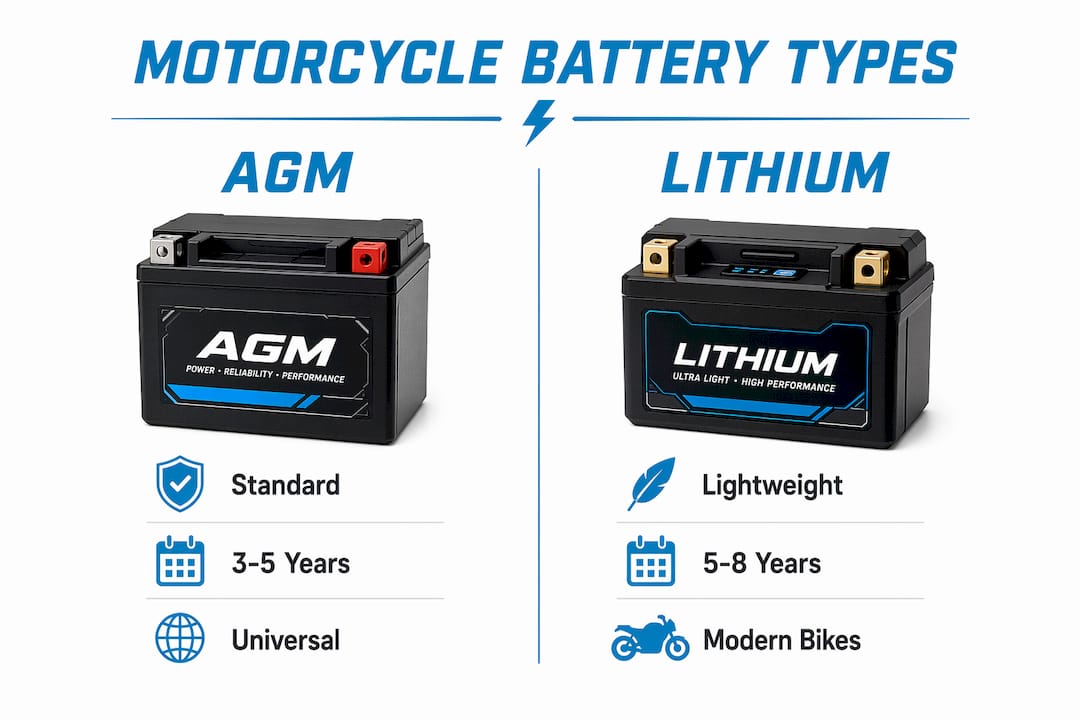
AGM lead-acid is the standard choice for most riders. AGM batteries last 3–5 years and offer universal charging compatibility, making them practical for touring bikes and all-season riders. They handle cold weather reliably and work with virtually any charging system, including older motorcycle regulators. The tradeoff is weight and a shorter lifespan compared to lithium.
Lithium (LiFePO4) batteries are the choice for performance and weight-conscious riders. Lithium batteries save 6–10 pounds compared to lead-acid types, which directly improves the power-to-weight ratio. Their lifespan runs 5–8 or more years. The catch is that many older motorcycle charging systems are incompatible with lithium batteries, risking overcharging if you do not verify your voltage regulator specs first.
Gel batteries use a silica-based electrolyte and are largely obsolete for modern motorcycles. They charge slowly, tolerate fewer charge cycles, and cost more than AGM for no meaningful performance gain. Most riders have no reason to choose gel over AGM.
- Commuter bikes: AGM is the practical, low-maintenance choice.
- Performance and track bikes: Lithium saves weight and delivers faster cranking.
- Touring and all-season bikes: AGM performs better in cold weather and works with any charger.
- Seasonal storage bikes: Either chemistry works, but a maintainer is required for both.
Pro Tip: If you are considering a lithium upgrade, check your bike’s voltage regulator output before buying. Older regulators can push voltage above the safe range for LiFePO4 cells, causing permanent damage after just a few charge cycles.
Why do Cold Cranking Amps matter so much?
Cold Cranking Amps (CCA) is the single most important performance spec on a motorcycle battery. CCA measures the current a battery delivers at 0°F for 30 seconds, which is the condition that most stresses a battery during startup. A battery with insufficient CCA will crank slowly or not at all in cold weather, even if it reads a full 12 volts on a meter.
Engine size drives CCA requirements directly. Small bikes need a 4–7 Ah range, while large bikes require 12–20 Ah with higher CCA ratings. A 1,200cc touring engine demands far more starting current than a 250cc commuter. Using an undersized battery on a large engine does not just cause hard starts. It forces the battery to work beyond its design limits on every cold start, accelerating plate degradation and cutting years off its service life.
Three specs must match your bike’s requirements exactly:
- CCA rating: Must meet or exceed the manufacturer’s minimum for your engine displacement.
- Terminal orientation: Positive and negative terminals must align with your bike’s cable routing. A reversed layout forces cable stress or dangerous improvisation.
- Physical dimensions: The battery must fit the tray without modification. A loose battery vibrates against the frame and fails early.
Voltage compatibility alone does not ensure correct battery fit. Two batteries can both read 12V and still be completely wrong for the same bike. Always cross-reference CCA, Ah rating, group size, and terminal layout against your owner’s manual before buying.
Maintenance considerations unique to motorcycle batteries
Motorcycle batteries fail faster than car batteries for one simple reason: motorcycles sit unused for longer stretches. Leaving a motorcycle parked without a maintainer causes sulfation in 2–3 months, which permanently reduces a lead-acid battery’s capacity. Sulfation happens when lead sulfate crystals harden on the battery plates during deep discharge. Once it sets in, no charger can fully reverse it.
Charger compatibility is a critical and often overlooked issue. Charging a lithium battery with a lead-acid charger damages the battery and creates safety risks. Lithium cells require a charger with a LiFePO4-specific charge profile. Using the wrong charger can cause permanent damage after just a few cycles. AGM batteries need a charger that recognizes their chemistry too, though they are more tolerant of standard 12V chargers than lithium.
- Winter storage: Connect a battery maintainer rated for your battery chemistry. A maintainer holds the battery at full charge without overcharging.
- Lithium in cold storage: LiFePO4 batteries can drop below their safe operating voltage in extreme cold. Store them at partial charge (around 50%) if temperatures fall below freezing for extended periods.
- Lead-acid in storage: Keep AGM batteries fully charged during storage. A discharged AGM sulfates faster than one stored at full charge.
- Charging frequency: Riders who commute daily rarely need a maintainer. Riders who park for weeks at a time need one every time.
Pro Tip: A quality lithium-compatible motorcycle charger is not optional if you own a LiFePO4 battery. It is the single maintenance item that most directly determines whether your battery reaches its full service life.
You can also reduce parasitic drain from accessories by following battery drain prevention practices when wiring lights or other add-ons to your bike.
How to select the best battery for your motorcycle
Matching a battery to your bike starts with the owner’s manual, not the parts store shelf. The manual lists the exact group size, minimum CCA, and Ah rating your bike’s electrical system was designed around. Deviating from those specs creates problems that show up months later, not immediately.
Riding style and climate refine the choice between AGM and lithium. The table below maps common rider profiles to the right battery chemistry.
| Rider profile | Best chemistry | Key reason |
|---|---|---|
| Daily commuter | AGM | Low cost, universal charging compatibility |
| Performance or track rider | Lithium (LiFePO4) | Weight savings, faster cranking |
| Touring or all-season rider | AGM | Cold weather reliability, any charger works |
| Seasonal or weekend rider | Either, with maintainer | Storage behavior matters more than chemistry |
| Older bike with stock charging system | AGM | Avoids regulator incompatibility with lithium |
Terminal orientation and physical fit must match the bike exactly to prevent electrical faults. A battery that sits loose in the tray or forces cable strain is a failure waiting to happen. Measure the tray dimensions and confirm the terminal layout before ordering.
Signs your current battery needs replacement include slow cranking on a warm engine, a battery that will not hold charge overnight, visible swelling on the case, or a battery that is more than four years old. Proper maintenance with quality chargers can double battery lifespan, so a battery that fails early often reflects a maintenance gap, not a product defect.
For riders weighing the AGM versus lithium decision in detail, the AGM vs. lithium comparison for touring bikes breaks down the tradeoffs by riding style and bike type.
Key Takeaways
A motorcycle requires a battery engineered specifically for its size, vibration levels, CCA demands, and chemistry compatibility to deliver reliable starting, stable electronics, and a full service life.
| Point | Details |
|---|---|
| Motorcycle batteries are not interchangeable with car batteries | Capacity, vibration resistance, and physical size differ fundamentally between the two. |
| CCA is the most critical spec | Match or exceed the manufacturer’s CCA rating for your engine size to avoid starting failures. |
| Chemistry choice affects lifespan and compatibility | AGM lasts 3–5 years; lithium lasts 5–8 or more years but requires a compatible charging system. |
| Maintenance determines real-world lifespan | Sulfation from neglect and wrong charger use are the two leading causes of early battery failure. |
| Physical fit is non-negotiable | Terminal orientation and tray dimensions must match exactly to prevent electrical faults and vibration damage. |
The battery is never just a battery
I have seen riders spend thousands on performance upgrades and then grab the cheapest battery that fits the tray. That logic is backwards. The motorcycle battery powers the ECU, ABS, and instrumentation, not just the starter motor. A weak or mismatched battery does not just cause hard starts. It creates voltage instability that affects every electronic system on the bike, including the ones that keep you safe at speed.
The misconception I run into most often is the idea that all 12V batteries are interchangeable. Many riders assume any 12V battery will work because the voltage matches. Voltage is one variable out of five. CCA, Ah rating, group size, terminal layout, and chemistry all have to align. I have watched riders install a battery with reversed terminals and wonder why their bike threw a fault code on the first start.
Maintenance is where most riders lose years of battery life without realizing it. A battery that sits discharged for two months in a garage is not resting. It is sulfating. The fix costs less than $30 and takes five minutes to set up. The cost of ignoring it is a battery replacement every two years instead of every five.
My honest recommendation: buy the right battery for your bike’s spec, pair it with the correct charger for its chemistry, and use a maintainer every time the bike sits for more than two weeks. That combination is what separates a battery that lasts two seasons from one that lasts a decade.
— Donald
Bansheebatteries has the right battery for your motorcycle
Choosing the right motorcycle battery is straightforward when you have the right options in front of you. Bansheebatteries builds AGM and lithium (LiFePO4) batteries specifically for powersports applications, with the vibration resistance, CCA ratings, and physical specs that motorcycle manufacturers require.
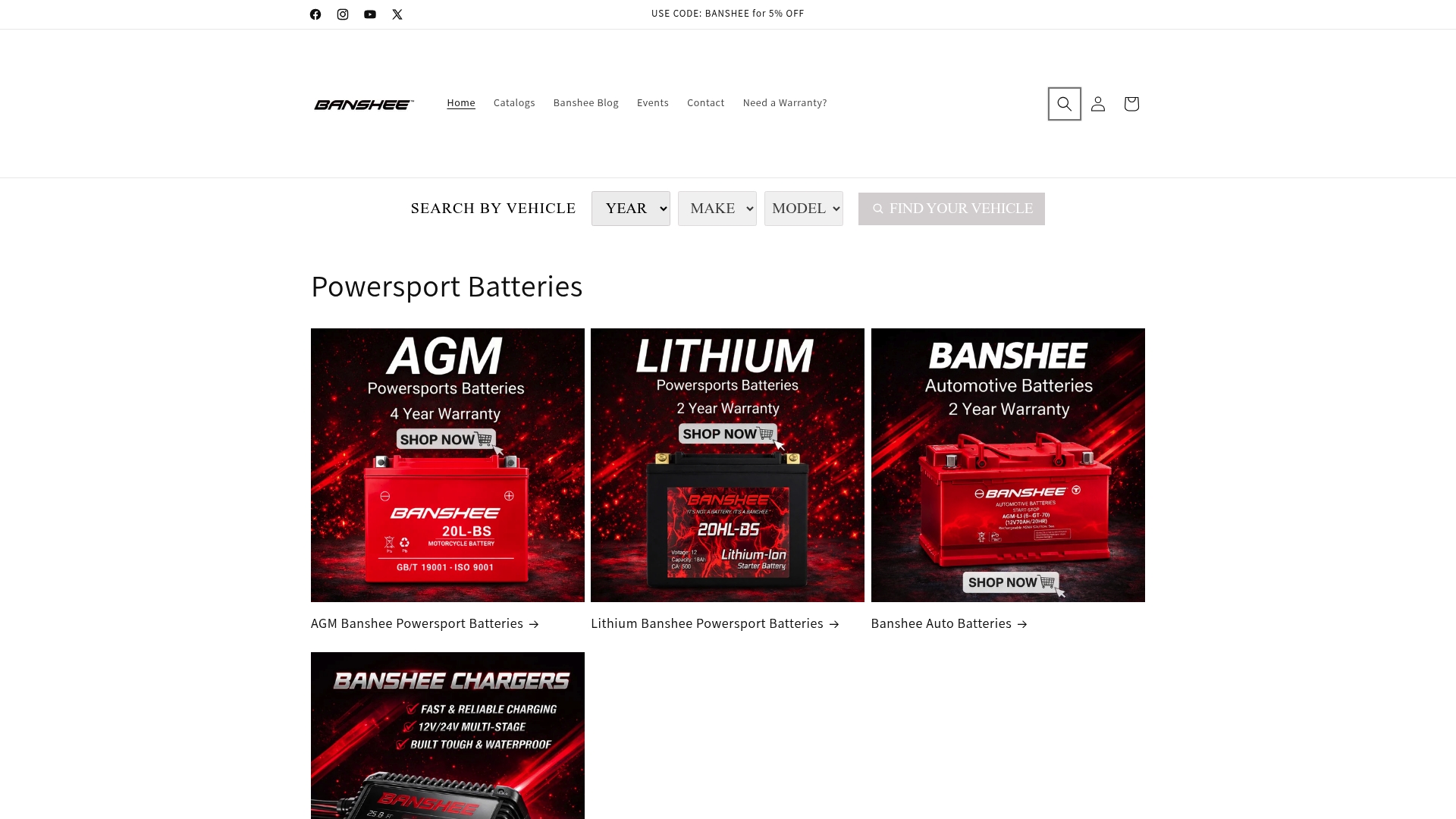
Every Bansheebatteries AGM motorcycle battery carries a 4-year warranty, and their lithium options back up the weight savings and long service life with a 2-year warranty. The AGM powersport battery collection covers a wide range of group sizes and CCA ratings for commuters, tourers, and performance bikes. Riders who want the weight savings of lithium can browse the lithium motorcycle battery lineup to find a direct-fit option for their bike. Bansheebatteries also offers expert guidance to help you match the right battery to your exact make and model.
FAQ
Why can’t I use a car battery on my motorcycle?
Car batteries range from 40–100 Ah and lack the vibration resistance motorcycle batteries require. They are also too large and heavy for motorcycle battery trays, affecting handling and fit.
What CCA rating does my motorcycle battery need?
Small bikes typically need batteries in the 4–7 Ah range, while larger bikes require 12–20 Ah with higher CCA. Always check your owner’s manual for the manufacturer’s minimum CCA specification.
Can I upgrade my motorcycle to a lithium battery?
Lithium (LiFePO4) batteries work well on modern bikes, but older charging systems may push voltage above safe limits for lithium cells. Verify your voltage regulator output before switching chemistry.
How long does a motorcycle battery last?
AGM lead-acid batteries last 3–5 years with proper maintenance. Lithium batteries last 5–8 or more years. Neglect, wrong charger use, and extended storage without a maintainer shorten both significantly.
What happens if I use the wrong charger on my motorcycle battery?
Using a lead-acid charger on a lithium battery causes permanent damage and creates safety risks. Each battery chemistry requires a charger with a matching charge profile to avoid overcharging and cell degradation.