


Why Lithium Batteries Handle Partial Charging So Well
Partial charging is better for lithium batteries because it keeps cells in an electrochemically stable zone, reducing the parasitic reactions and mechanical stress that cause permanent capacity loss. LiFePO4 systems used in marine and powersports applications follow a similar logic, though their flatter voltage curve gives slightly more flexibility.
Who benefits most from mid-SoC charging:
- Smartphones and laptops: 20–80% daily; most modern devices let you set an 80% charge limit in settings
- Electric vehicles: 40–80% for daily commuting; reserve 100% for long trips only
- LiFePO4 marine and powersports packs: 20–80% during active season; store at roughly 50% off-season
- Long-term storage (any chemistry): park at 40–50% in a cool, dry location
The one exception worth noting upfront: a full charge is occasionally necessary for battery gauge calibration or when you genuinely need maximum range. More on that later.
Key Takeaways
| Point | Details |
|---|---|
| Use the 20–80% window daily | Staying within this range reduces SEI growth, cathode stress, and microcracking across all major lithium chemistries. |
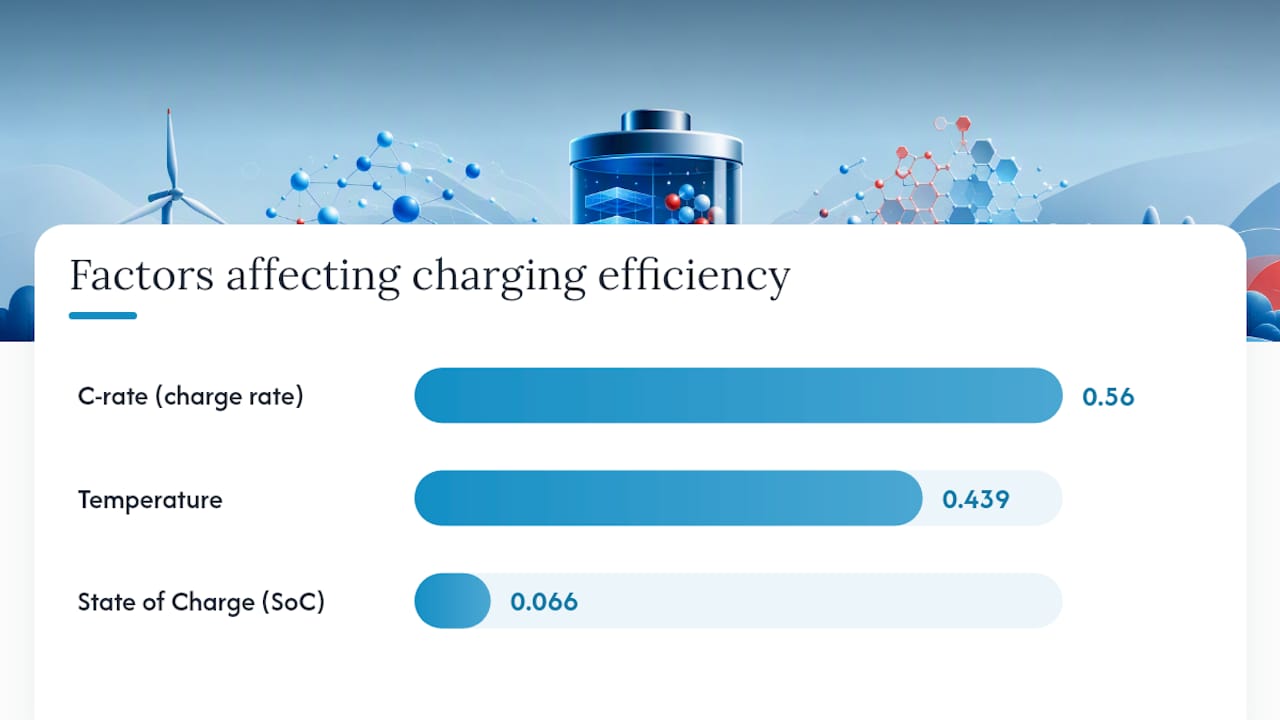
| C-rate matters more than SoC for efficiency | The ScienceDirect CEE study identified charging rate as the most influential factor on energy losses, with operating SoC having a smaller but still relevant impact; thus, slowing charge rate near high SoC is beneficial. |
| Reduce upper SoC limit in heat | High SoC combined with high temperature accelerates calendar aging; drop your ceiling to 70% when operating above 35°C. |
| Store at 40–50% SoC | Long-term storage at full or empty charge accelerates degradation; 40–50% is the stable resting point for any lithium chemistry. |
| Full charges are fine occasionally | Charge to 100% for long trips or calibration, but minimize time spent at full charge and return to mid-SoC habits immediately after. |
Table of Contents
- Why lithium batteries handle partial charging: the electrochemical mechanisms
- What laboratory tests and peer-reviewed studies actually show
- Practical state-of-charge guidance by device and chemistry
- How temperature and charge rate change the value of partial charging
- What does your BMS actually do for partial charging?
- When is a full charge actually the right call?
- A note from Bansheebatteries on applying these rules
- Sources
Why lithium batteries handle partial charging: the electrochemical mechanisms
The short answer is that high SoC is chemically hostile territory for lithium cells.
SEI layer growth
The solid electrolyte interphase (SEI) is a thin film that forms on the graphite anode during initial cycling. It’s actually protective in small amounts, but it keeps growing. At high SoC, the anode potential drops low enough to drive continued electrolyte reduction, thickening the SEI and consuming lithium that can never be recovered. The result is permanent capacity loss and rising internal resistance. Staying below 80% keeps the anode potential in a range where SEI growth slows considerably, which is precisely why IOP fleet and lab studies found cells cycled mainly in a 40–80% SoC window showed lower SEI growth, less microcracking, and slower impedance rise than cells repeatedly taken to 100%.
Cathode-side parasitic reactions
At the cathode, high voltage drives electrolyte oxidation and transition-metal dissolution. In NMC and NCA chemistries, pushing to full charge forces the cathode into an oxidative regime where the crystal structure becomes less stable. Dissolved transition metals migrate to the anode and contaminate the SEI, compounding the damage. Industry analysis frames the 20–80% window as an “electrochemically stable zone” precisely because it avoids the voltage extremes that thermodynamically favor these reactions.
Electrode expansion, microcracking, and lithium plating
Every charge and discharge cycle causes graphite and cathode particles to expand and contract. Those cracks expose fresh surfaces to electrolyte, accelerating SEI growth in a feedback loop. Shallow cycles reduce that mechanical strain substantially. Lithium plating is a related risk: at low temperatures or high charge rates, lithium ions can’t intercalate fast enough and deposit as metallic lithium on the anode instead. Metallic lithium is both a capacity loss and a safety hazard. Mid-SoC charging reduces plating risk because the anode is less saturated and can accept ions more readily.
Mechanism summary:
- SEI growth → capacity loss, impedance rise; slowed by staying below ~80% SoC
- Electrolyte oxidation / transition-metal dissolution → cathode degradation; slowed by avoiding high-voltage extremes
- Electrode microcracking → accelerated SEI growth; reduced by shallower depth of discharge
- Lithium plating → capacity loss and thermal risk; reduced by mid-SoC operation and moderate charge rates
What laboratory tests and peer-reviewed studies actually show
The evidence base for partial charging is solid, though the exact magnitude of benefit varies by chemistry, temperature, and protocol.
The IOP study on real-world BEV fast charging is among the most directly applicable. The partial-cycling groups showed measurably lower charge-transfer resistance growth and less particle microcracking than the full-cycling group. This isn’t a lab artifact: the test used actual fast-charging current profiles from fleet data, making the findings relevant to anyone charging a vehicle or large pack regularly.
A ScienceDirect study on charging energy efficiency for commercial ternary lithium cells mapped how efficiency changes across SoC, temperature, and C-rate combinations. The global sensitivity analysis ranked C-rate as the dominant factor (Sobol index 0.56), temperature second (0.439), and SoC third (0.066). That ranking matters: it means the rate at which you charge often has a larger immediate effect on energy losses than the SoC window you target. Partial charging still helps, but pairing it with a moderate charge rate is the more powerful lever.
IEEE research on adaptive charging strategies showed that balancing converter and battery efficiency can enhance instantaneous system efficiency and maintain battery longevity compared to traditional constant-current/constant-voltage charging, as detailed in IEEE publication. This is relevant for anyone using a smart charger or BMS with programmable charge profiles.
Evidence caveats worth knowing: most controlled studies use small-format cells under lab conditions. Fleet data adds realism but introduces confounders like temperature variation and driver behavior. LiFePO4 cells, with their flatter voltage curve, show somewhat different sensitivity to SoC windows than NMC or NCA. The consistent pattern across all chemistries is that lower high-SoC exposure correlates with slower degradation, but the exact cycle-life multiplier depends heavily on chemistry and operating temperature.
Battery University synthesizes this evidence into practical guidance: partial charges prolong life, lithium cells have no memory effect, and routine full discharges accelerate wear rather than helping. Full discharges are only occasionally useful for SoC gauge calibration.
Practical state-of-charge guidance by device and chemistry
Knowing the mechanisms is useful. Knowing what to actually do with your specific device is more useful.
Consumer electronics (phones, laptops, tablets)
Most flagship smartphones and laptops now include a built-in charge limit: Apple’s Optimized Battery Charging, Android’s Adaptive Charging, and Windows Battery Saver all work toward this goal automatically. If your device lacks a native limit, third-party tools or smart plugs with scheduling can approximate it. The benefits of LiFePO4 chemistry extend to consumer-grade lithium cells too: shallower cycles consistently outperform deep ones for long-term capacity retention.
Electric vehicles
The logic is the same as above, amplified by the larger pack size and the fact that fast charging (high C-rate) into a nearly full pack is where the most damage occurs. Set your vehicle’s charge limit in the app and leave it there.
LiFePO4 marine and powersports packs
LiFePO4 chemistry has a flatter voltage curve than NMC or NCA, which means it’s somewhat less sensitive to high-SoC stress. Bansheebatteries recommends reviewing the LiFePO4 storage guide for chemistry-specific storage SoC and temperature guidance.
Long-term storage (any chemistry)
A fully charged pack sitting unused for months accelerates calendar aging through the same parasitic reactions that harm cycle life. A fully depleted pack risks falling below the minimum voltage threshold, which can permanently damage cells.
Pro Tip: Once every two to three months, allow a full charge followed by a full discharge to let the BMS recalibrate its SoC estimate. After calibration, return to your normal mid-SoC routine.
How temperature and charge rate change the value of partial charging
Temperature and C-rate don’t just affect performance in the moment. They interact directly with SoC to either amplify or reduce degradation.
Heat accelerates every parasitic reaction described above. At elevated temperatures, electrolyte oxidation and SEI growth proceed faster at any SoC, but the effect is disproportionately worse at high SoC. The combination of high SoC and high temperature is the worst-case scenario for calendar aging.
C-rate compounds the problem during charging. Higher charge currents increase internal heating through resistive losses, which raises local cell temperature even when ambient temperature is moderate. The ScienceDirect CEE study found C-rate carries a Sobol sensitivity index of 0.56 versus 0.439 for temperature and 0.066 for SoC in ternary cells. Fast charging into a nearly full pack stacks all three stressors simultaneously: high SoC, elevated temperature from resistive heating, and high current-driven mechanical stress.
Key interaction rule: Reduce your upper SoC limit when operating in hot conditions. If your device regularly runs warm (above 35°C / 95°F), dropping the charge ceiling from 80% to 70% provides meaningful additional protection. Slow charging near the upper SoC limit is always preferable to fast charging into a full pack, regardless of ambient temperature.
Practical rules for heat and C-rate:
- Avoid leaving any lithium pack at high SoC in a hot environment (boat engine bays, car trunks in summer, direct sunlight)
- Use the slowest charger that fits your schedule when charging above 70% SoC
- If your device supports it, enable temperature-aware charging that automatically slows the charge rate when the cell is warm
- For extending vehicle electronics life generally, keeping batteries away from heat sources and out of direct sun is one of the highest-return habits
What does your BMS actually do for partial charging?
A Battery Management System (BMS) is the hardware layer that enforces the rules you set and protects cells from conditions they can’t handle on their own. Understanding what your BMS can and can’t do matters before you change your charging behavior.
Core BMS functions relevant to partial charging:
- Upper voltage cutoff: Prevents charging above the cell’s maximum voltage. This is the hard safety limit, not the longevity limit. Setting a charge ceiling at 80% SoC is a separate, softer limit that most consumer BMS units support through firmware or app settings.
- Temperature-aware charging: Better BMS units reduce charge current when cell temperature rises above a threshold, directly addressing the C-rate/heat interaction described above.
- Cell balancing: In multi-cell packs, individual cells drift apart in SoC over time. A BMS with passive or active balancing corrects this. Without balancing, partial charging becomes less effective because the weakest cell limits the usable window for the whole pack.
- SoC estimation: The BMS calculates SoC from voltage and current data. Calibration (an occasional full cycle) keeps this estimate accurate.
Questions to ask about your BMS before adjusting charging habits:
- Can you set a charge ceiling below 100% (e.g., 80%) through firmware or app?
- Does it support temperature compensation for charge current?
- Does it perform cell balancing, and is it passive or active?
- Is the charge profile matched to your chemistry (Li-ion vs LiFePO4 have different voltage profiles)?
Cell imbalance is a real problem in aging multi-cell packs. If one cell is significantly weaker, the BMS may terminate charging early to protect it, meaning the rest of the pack never reaches the target SoC. Active balancing corrects this more effectively than passive balancing, which only dissipates excess energy as heat. For Bansheebatteries LiFePO4 packs, using a charger matched to the LiFePO4 voltage profile is critical. The LiFePO4 charger guide covers which charger profiles are compatible and why using a generic lead-acid charger on a lithium pack can bypass the protections the BMS is designed to enforce.
When is a full charge actually the right call?
Situations that justify a full charge:
- Long trips or full-day field use where you need maximum range or runtime
- Firmware updates on EVs or smart devices that require a full charge to complete
- Periodic SoC gauge calibration (once every two to three months is sufficient)
- Emergency situations where you need every available amp-hour
Charge to full as close to departure as possible, rather than overnight. For LiFePO4 storage, this principle is especially important during seasonal layup.
Most smart chargers and EV apps support a departure-time setting that handles this automatically.
Full discharges are a different matter. Battery University is direct on this: lithium chemistries have no memory effect, so full discharges are never needed for conditioning. The only valid use case is occasional calibration of the SoC gauge, and even then, once every few months is plenty. Routine full discharges accelerate wear.
A note from Bansheebatteries on applying these rules
The science here maps cleanly onto what we see with our LiFePO4 powersports and marine customers.
The trade-off between runtime and longevity is real. That’s what the battery is for. The goal of mid-SoC charging is to make that capacity available for more seasons, not to leave range on the table every single ride.
Bansheebatteries LiFePO4 packs are built with integrated BMS protection that handles upper voltage cutoffs and temperature monitoring, but the charge ceiling setting and charger compatibility are still your responsibility. If you’re unsure which charger profile or SoC window fits your specific pack, the lithium powersports conversion guide is a good starting point, and our support team can walk you through device-specific recommendations.

For marine applications, the Bansheebatteries LiFePO4 marine battery lineup includes packs designed for the thermal and vibration demands of on-water use, with a 5-year warranty that reflects confidence in their long-term durability when used correctly.
Sources
- State-of-Charge cycling window dependence of lithium-ion battery degradation under real-world BEV fast charging (IOPscience)
- Why lithium-ion batteries last longer at 20–80% state of charge — EEPower Industry Articles
- BU-808: How to Prolong Lithium-based Batteries — Battery University
- Charging energy efficiency map and sensitivity analysis for commercial ternary lithium-ion batteries — ScienceDirect