


Why Vehicle and Marine Batteries Swell, and What to Do Now
A swollen AGM, EFB, or LiFePO4 battery is producing internal gas faster than it can vent or reabsorb it, and that pressure comes from a specific mix of causes: electrode expansion, lithium plating, SEI/CEI growth, and outright gas generation from electrolyte breakdown. Any one of these can raise internal resistance, warp the case, and in worst cases lead to venting or fire. If you’re standing next to a bulging battery right now, do this first:
- Stop charging immediately. Unplug the charger or shut off the alternator field.
- Isolate the battery. Disconnect the negative terminal, then the positive, if it’s safe to touch.
- Move it to open air. Gas buildup in a bilge, saddlebag, or enclosed compartment needs ventilation, not a closed hatch.
Peer-reviewed research on swelling mechanisms backs up what installers see in the field constantly. Once you’ve secured the area, Bansheebatteries can help you sort out a safe replacement.
Key Takeaways
Battery swelling comes from a specific, identifiable set of causes, and matching your response to the right cause is what separates a safe fix from a fire risk.
| Point | Details |
|---|---|
| Stop charging first | Disconnect power immediately at any sign of bulging, heat, or odor before inspecting further. |
| Know the mechanisms | Intercalation is reversible; SEI/CEI growth, lithium plating, and gas generation are not. |
| Chemistry changes the response | AGM venting is permanent; small LiFePO4 mechanical bulges may be normal. |
| Fix charger settings | Match absorption/float voltage and temperature compensation to the battery chemistry. |
| Replace, don’t compress | Gas-filled bulges need retirement; Bansheebatteries offers warrantied AGM and LiFePO4 replacements sized for marine and powersports use. |
Table of Contents
- What Are the Warning Signs of a Swelling Battery?
- What Causes a Battery to Swell From the Inside Out?
- What Field Conditions Actually Trigger Swelling in Boats and Off-Road Vehicles?
- Does an AGM Battery Swell Differently Than a LiFePO4 Battery?
- How Do You Prevent Battery Swelling Before It Starts?
- When Should You Replace a Swollen Battery Instead of Trying to Fix It?
- Get the Right Replacement Battery Without the Guesswork
- Frequently Asked Questions
- Sources
What Are the Warning Signs of a Swelling Battery?
A bulging case is the obvious tell, but check three things before you touch anything else: the shape of the case (is it uniformly puffed or bulging at one spot?), the terminals (are they pushed outward or cracked at the base?), and the smell (a sharp, sulfur-like or acrid odor means gas is actively escaping). Heat radiating off the case without recent heavy use is a red flag on its own.
A firm, centered bulge on a LiFePO4 prismatic cell that doesn’t give when pressed is often just mechanical expansion from normal charge cycling. A soft, spongy, or squishy bulge signals gas generation, and that’s a failure mode that ends in retirement, not repair.
Work through this sequence:
- Stop charging and remove the charger or shore power connection.
- Kill all loads at the battery switch or disconnect.
- Avoid creating sparks near the terminals. No jumper cables, no wrenches touching both posts.
- Ventilate the compartment before you do anything else.
- Wear gloves and eye protection if you smell electrolyte or see leakage.
- Call your installer or Bansheebatteries support if you’re unsure of severity.
Pro Tip: Never clamp down on a suspected gassing LiFePO4 cell to “push the bulge back in.” If the swelling is gas-driven rather than mechanical, compression can rupture the pouch or crack a prismatic case, releasing electrolyte and accelerating thermal runaway.
What Causes a Battery to Swell From the Inside Out?
Swelling starts at the electrode level. Lithium ions move in and out of the graphite or LFP structure during charge and discharge, a process called intercalation, and that causes a small, reversible expansion every cycle. That part is normal and expected. The trouble starts when side reactions pile on top of it.
Every lithium-ion cell grows a thin passivation layer on the electrode surface called the solid electrolyte interphase (SEI) on the anode and a cathode electrolyte interphase (CEI) on the cathode. These layers are supposed to stabilize the cell, but heat, high voltage, and age make them thicken over time, consuming active lithium and adding irreversible bulk. Lithium plating is a related but nastier problem: charging too fast or too cold deposits metallic lithium on the anode surface instead of intercalating it properly, which both eats capacity and adds physical volume that never reverses.
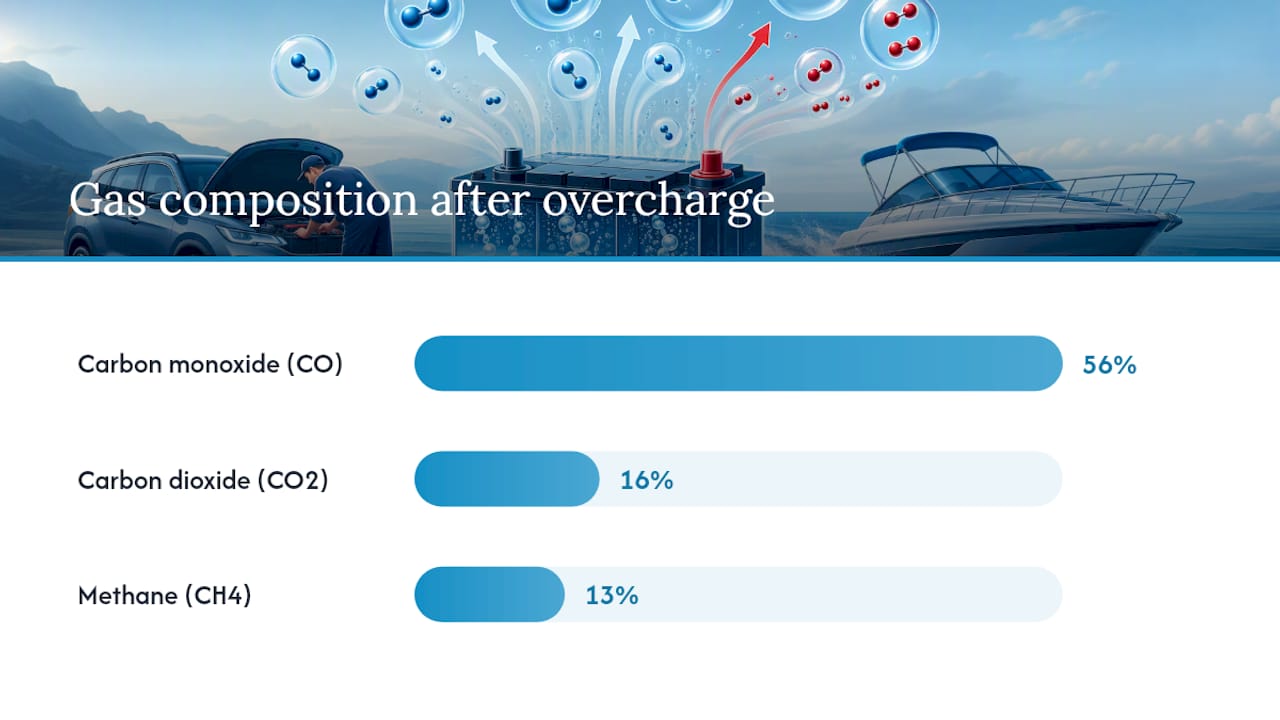
Gas generation is the mechanism that actually causes visible bulging. Electrolyte solvents break down under overcharge or heat and release gas, and that process has been measured directly.
By the numbers: In one severe overcharge test on an NMC-graphite cell, the resulting gas was roughly 56% carbon monoxide, 16% carbon dioxide, and 13% methane, and researchers recorded cell thickness increases of over 29% during long-term cycling under stress conditions.
Here’s how the mechanisms break down by reversibility:
- Reversible: normal intercalation expansion during charge/discharge cycling.
- Slowly irreversible: SEI/CEI thickening from heat and age.
- Irreversible and dangerous: lithium plating and gas generation from electrolyte breakdown.
A simple cross-section diagram of a cell, showing the SEI layer, the expanding electrode, and any trapped gas pockets, makes this a lot easier to visualize than text alone. If your installer can sketch that on a whiteboard during a service visit, it clicks fast.
What Field Conditions Actually Trigger Swelling in Boats and Off-Road Vehicles?
Lab mechanisms explain the “why.” Field conditions explain the “how it happened to your battery.” Overcharging tops the list, and it usually isn’t intentional. Alternators without a proper regulator, or with a regulator set too high, push voltage past what the battery needs once it’s full. A regulator locked at 14.4 to 14.6 volts with no float stage or temperature compensation is a documented cause of AGM swelling reported repeatedly by AGM installers running hot climates.
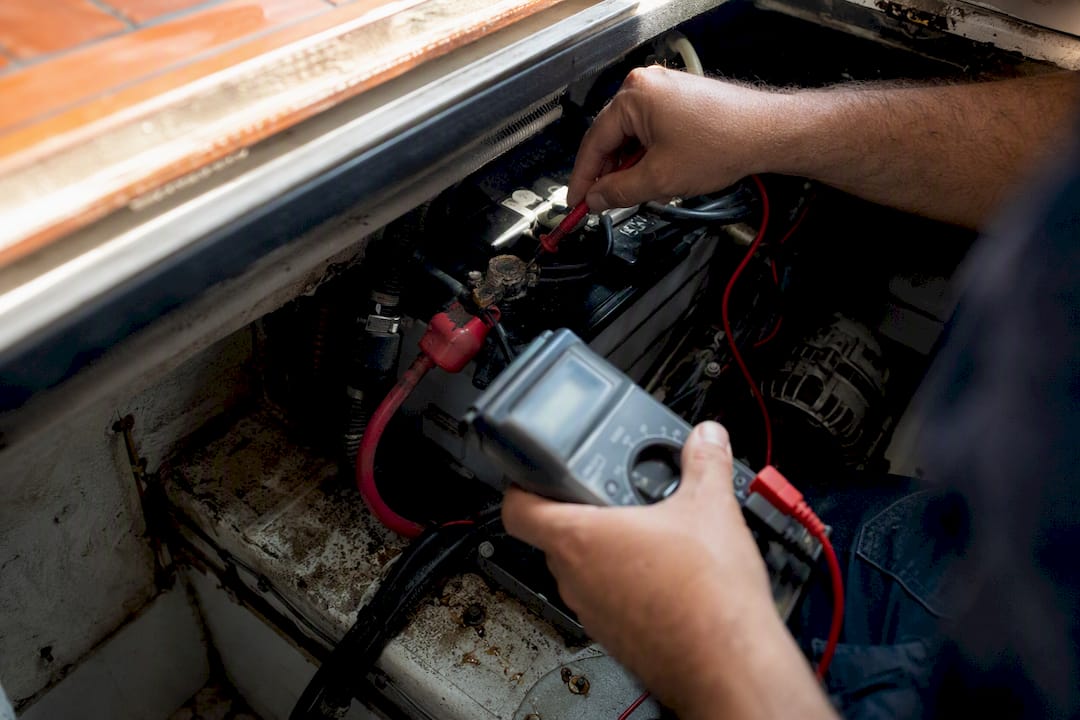
Heat compounds every other problem. Charging in direct sun, inside an engine compartment, or in a sealed bilge accelerates SEI growth and gas generation at the chemical level, and it’s consistently flagged as the top driver of capacity loss and swelling in field reports.
A few other patterns show up again and again:
- High C-rate charging, where a charger or alternator pushes current faster than the cell chemistry tolerates, measurably increases mechanical stress in lab testing.
- Charging LiFePO4 below freezing promotes lithium plating instead of clean intercalation.
- Long-term storage at full charge in a hot garage or marina locker degrades cells faster than storage at a partial state of charge.
- Multiple solar MPPT controllers on the same bank can stack absorption cycles, keeping the battery at high voltage far longer than any single controller intends.
Does an AGM Battery Swell Differently Than a LiFePO4 Battery?
Yes, and the difference matters for how you respond. Sealed AGM and gel batteries recombine internal gases during normal charging, but they have a limited safety valve for pressure relief. Push them into sustained overcharge and that valve vents, and once it vents, the battery is done. There’s no adding water or topping off electrolyte on a sealed VRLA design. Venting is permanent, and swelling that follows a vent event will not improve with rest or a lower charge rate.
LiFePO4 behaves differently at the edges. A prismatic cell can show 1 to 2 millimeters of normal thickness change between empty and full simply from intercalation, and that’s harmless. Permanent growth of 3 to 4 millimeters or more usually means internal delamination, and that’s a sign the cell has crossed into end-of-life territory even without visible gas.
What this means for mounting and inspection:
- AGM/EFB batteries need secure mounting but don’t require compression fixtures, since their expansion mode is pressure venting, not mechanical growth.
- LiFePO4 prismatic packs benefit from rigid compression fixtures and flexible busbars that tolerate small dimensional changes without stressing the connections.
- Check AGM banks for a raised or domed top case as the earliest sign; check LiFePO4 packs by comparing cell thickness against a baseline measurement taken at installation.
For a deeper side-by-side, Bansheebatteries breaks down the AGM versus LiFePO4 tradeoffs in more detail.
How Do You Prevent Battery Swelling Before It Starts?
Charger settings matter more than almost anything else on this list. Lead-acid chargers pushed onto lithium batteries are a common and preventable mistake. Lithium packs shouldn’t sit for long stretches above roughly 14.6 volts, and AGM banks need genuine temperature compensation if they’re charging in a hot engine bay or direct sun.
| Setting or Practice | Recommendation |
|---|---|
| AGM absorption voltage | Match charger to manufacturer spec with temperature compensation active |
| LiFePO4 charge ceiling | Avoid extended time above 14.6V on a 12V pack |
| Storage state of charge | Store partially charged, not at 100%, especially in heat |
| Cold charging | Skip LiFePO4 charging below 32°F to prevent lithium plating |
| Inspection frequency | Check case shape and terminal tightness every season |
A few more habits worth building into your maintenance routine:
- Learn what float voltage actually controls before adjusting any charger.
- Use mounting hardware that accounts for vibration resistance on trailered boats and off-road rigs.
- If you’re running multiple charge sources, coordinate absorption timing the same way you would when managing load across chargers in a multi-source home system.
- Store LiFePO4 packs correctly over winter using proper storage guidance rather than leaving them on a trickle charger indefinitely.
Pro Tip: If your boat or ATV sits for months at a time, a smart BMS with cell-level voltage alerts catches an imbalanced cell weeks before it swells visibly. That’s cheaper than replacing the whole pack.
When Should You Replace a Swollen Battery Instead of Trying to Fix It?
A permanent bulge beyond 3 to 4 millimeters, a case that feels soft or spongy anywhere, any sign of venting, or a sudden drop in usable capacity are all replacement triggers, not repair projects. Internal resistance climbs sharply once swelling sets in, and a battery that measures high resistance on a load test is on borrowed time even if it still holds some charge.
When shopping for a replacement, match capacity and form factor first, then check the charge rating and BMS features if you’re going lithium. Confirm the warranty terms before you buy. Bansheebatteries backs its AGM line with a 4-year warranty and its lithium marine batteries with 5 years, which matters if a swelling issue shows up early.
For transport and disposal:
- Wrap terminals with electrical tape before moving a swollen battery.
- Carry it upright in a ventilated container, never sealed in plastic.
- Take it to a certified battery recycler or your retailer’s take-back program. Never toss a swollen battery in household trash.
- Review the signs it’s time to replace before assuming a battery is salvageable.
Why This Guidance Holds Up
This guidance draws on peer-reviewed battery science, including studies published through MDPI Batteries and rate-dependence research in the Journal of Power Sources, alongside field reports from installers and marine electricians. Bansheebatteries brings more than 20 years of hands-on experience building AGM and LiFePO4 batteries for exactly these conditions.
- Mechanisms cited come from published battery degradation research.
- Field causes reflect patterns reported by installers and charging-system communities.
- Product and warranty details come directly from current Bansheebatteries offerings.
A Note From the Field
Most swelling calls we see trace back to a charger set wrong, not a bad cell. Check absorption voltage and inspection cadence before assuming the pack itself failed. When the case is soft or vented, stop troubleshooting and replace it.
Get the Right Replacement Battery Without the Guesswork
A swollen battery on a boat or bike isn’t something to nurse along, and picking the wrong replacement just repeats the problem in another season. Bansheebatteries builds AGM and LiFePO4 batteries specifically for the heat, vibration, and long idle periods that cause swelling in the first place, backed by a 4-year warranty on AGM and 5 years on lithium marine batteries.
If you’re replacing a swollen unit on a boat, the lithium marine battery lineup covers common trolling motor and deep-cycle setups, including the 12V 100Ah LiFePO4 option sized for most RV and marine applications. Riders swapping out a motorcycle or ATV battery can browse the powersports lithium collection, and anyone unsure which spec fits their vehicle can reach Bansheebatteries support directly for installation and charger-matching help. Start by checking your vehicle’s battery specs against the collection pages, then order with warranty coverage already built in.
Frequently Asked Questions
Can a swollen battery explode? A gas-filled AGM or lithium battery can vent violently or ignite under continued overcharge or physical damage, though outright explosion is less common than venting or fire. Treat any bulging case as an immediate safety issue.
What are the earliest signs of battery swelling? A slightly domed top case, terminals that feel loose or pushed outward, and unusual heat during normal charging are the earliest signs, often before visible bulging.
How do you prevent battery swelling in a boat or RV that sits unused for months? Store the battery at a partial state of charge rather than full, keep it in a ventilated space away from direct heat, and check case shape every few weeks during long storage.
Is a small bulge on a LiFePO4 battery always dangerous? Not always. A firm, centered bulge that matches normal charge-cycle expansion is often mechanical and harmless, while a soft or spongy bulge signals gas generation and needs immediate attention.
Sources
- Swelling in lithium-ion batteries (MDPI Batteries)
- Rate dependence of swelling in lithium-ion cells
- Managing Swollen LiFePO4 Prismatic Cells - VoltTech Insights
- Can You Overcharge a Marine Battery? Prevention & Risks