


Top Replacement Batteries for High-Performance Cars
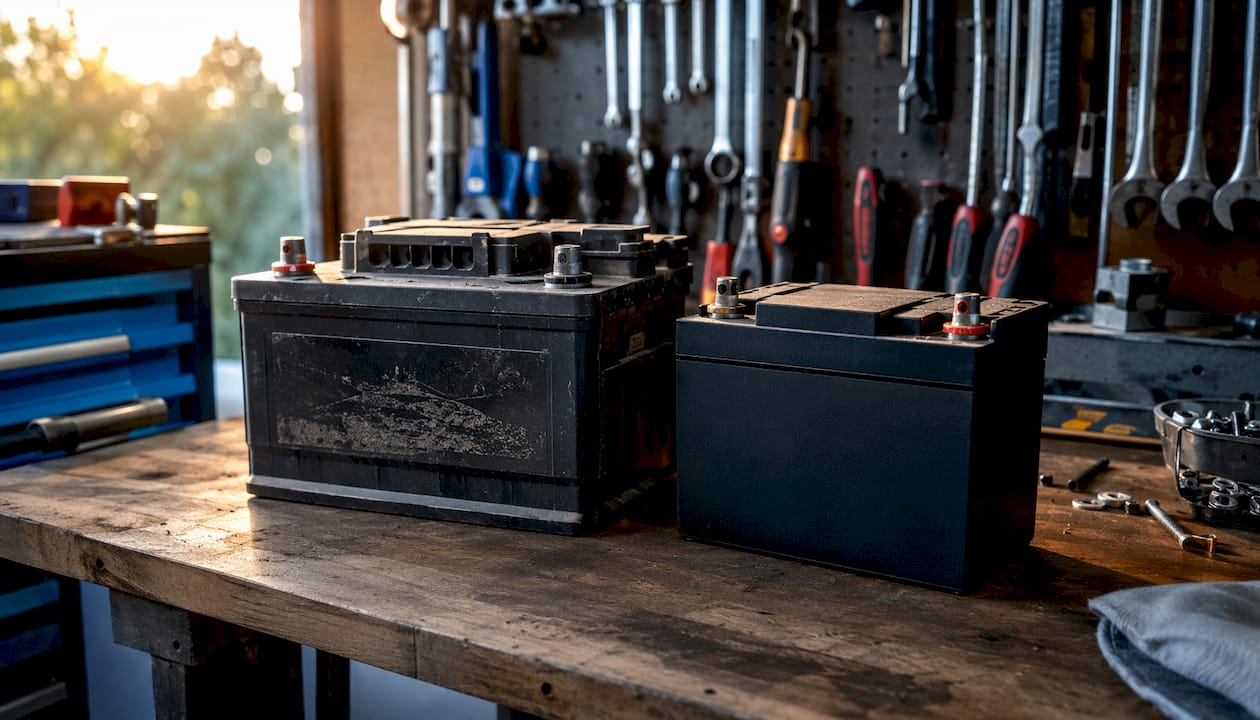
For most high-performance cars, powersports builds, and marine applications, LiFePO4 (lithium iron phosphate) is the upgrade worth making. It cuts weight, delivers higher cranking amps on demand, and lasts far longer in cycle count than any AGM unit. That said, AGM remains the smarter call when your OEM charging system isn’t lithium-compatible or when sustained under-hood heat above 140°F is unavoidable.
Before you buy anything, pull three numbers: your BCI/Group size, your required cold cranking amps (CCA), and your terminal layout. Those three determine fit. Everything else is chemistry preference.
- Consumer Reports battery testing includes extreme temperature cycling, cold-start simulation at 0°F, and reserve capacity measurement — AGM performs well overall but loses life faster in high-heat environments.
- Bansheebatteries offers warranties on its AGM and lithium marine battery lines, providing comprehensive coverage in the powersports and marine segment.
Pro Tip: If you’re mounting a battery in a trunk or under a seat near exhaust routing, add a heat shield or relocate the battery to a cooler spot. Heat is the single fastest way to shorten AGM life, and it can trigger thermal issues in lithium cells not rated for high ambient temps.
Table of Contents
- AGM vs LiFePO4: Which chemistry fits your build?
- How do you choose the right replacement battery for your vehicle?
- What changes when you install LiFePO4 vs. staying with AGM?
- How long do high-performance batteries actually last?
- What does a battery replacement actually cost?
- Key Takeaways
- Why Bansheebatteries is the right supplier for this purchase
- Bansheebatteries products ready to ship for your build
- Useful sources
AGM vs LiFePO4: Which chemistry fits your build?
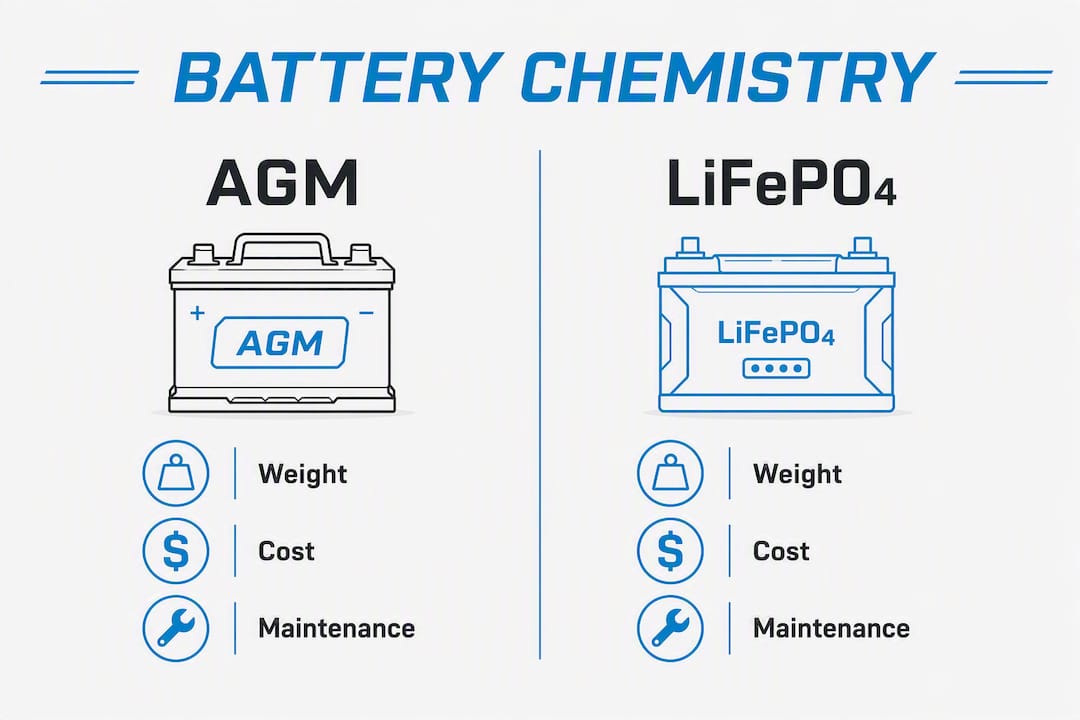
| Dimension | AGM | LiFePO4 |
|---|---|---|
| Weight | 30 lbs (Group 48 typical) | 10–20 lbs (comparable Group) |
| Cycle Life / Deep Discharge | —; partial discharge preferred | thousands of cycles; tolerates full discharge |
| Charging / BMS | Standard OEM alternator compatible | Requires LiFePO4 charger profile; BMS recommended |
| Warranty | Up to 4 years (Bansheebatteries) | Up to 5 years marine (Bansheebatteries) |
| Heat Tolerance | Degrades above 140°F; placement matters | Varies by cell; avoid sustained temps above 140°F |
| Physical Fit / Terminal | Drop-in BCI-standard | Confirm BCI group and terminal polarity before ordering |
The tradeoffs that actually move the needle for performance drivers:
- Weight savings are real. Race-grade lithium units for Group 48 applications can weigh around 10.5 lbs versus 40+ lbs for a comparable AGM, which matters on a track where every pound counts.
- Cold starts favor lithium at moderate temperatures, but some lithium chemistries need a brief warm-up cycle below 0°F. AGM is more predictable in extreme cold if your vehicle sits outside all winter.
- Total cost of ownership flips the upfront math. An AGM at $180 replaced every 3 years costs more over a decade than a LiFePO4 unit at $400 that lasts 8–10 years with proper care.
- Consumer Reports lab testing runs 180 charge/discharge cycles in a 167°F water bath — AGM batteries that score well in cold-start tests still show accelerated life loss under sustained heat.
- Race-grade lithium annual failure rates run below 0.5% in road and factory race cars, with most failures tied to incorrect charging or physical abuse rather than cell degradation.
An emerging option worth noting: solid-state batteries like the LIPOWER Group 48 advertise 1,200–1,500 CCA, a -22°F to 140°F operating range, and up to a 10-year lifespan. They’re not yet mainstream but signal where high-capacity car battery technology is heading.
How do you choose the right replacement battery for your vehicle?
Compatibility checklist
- Confirm BCI/Group size and terminal layout. Measure your battery tray and check whether positive is left or right. A reversed terminal on a lithium unit can damage electronics instantly.
- Verify your CCA requirement. Match or exceed the OEM spec. High-displacement engines and cold climates need more headroom — don’t downgrade CCA to save money.
- Check mounting height and hold-down clearance. Some lithium units are taller or shorter than their AGM equivalents. Vibration is a real killer in powersports; a loose battery fails faster regardless of chemistry. Bansheebatteries covers AGM vibration handling in detail if you’re unsure about your mounting setup.
- Verify OEM charging system compatibility. Most OEM alternators charge between 13.8V and 14.4V, which works for AGM. LiFePO4 needs a charger or alternator that won’t overcharge above 14.6V. If your vehicle has a smart alternator or start-stop system, confirm LiFePO4 compatibility before switching.
- Check warranty and return policy. A battery sold without a clear warranty is a risk you don’t need to take.
Special cases
- Start-stop systems: These demand AGM or a purpose-built LiFePO4 with a BMS that handles rapid cycling. Standard flooded batteries fail quickly here.
- Aftermarket audio or lighting loads: Heavy accessory draws reduce reserve capacity fast. If you’ve added high-lumen lighting or a large amplifier, factor that into your reserve capacity (RC) requirement, not just CCA.
- Total-loss race applications: Some race builds run no alternator at all. LiFePO4 is the only practical chemistry here — its energy density and weight savings make it the default choice.
Pro Tip: Check the manufacture date code on any battery before buying. A battery sitting in a warehouse for 8 months has already lost some of its initial capacity. For best performance, buy a unit manufactured within the last 3–6 months.
What changes when you install LiFePO4 vs. staying with AGM?
The short answer: switching to LiFePO4 requires a compatible charger profile and, ideally, a battery management system (BMS). Staying with AGM means your existing charger and alternator work as-is.
Installation steps
- Disconnect the negative terminal first, then the positive. Never reverse this order.
- Remove the old battery and inspect the tray for corrosion or cracks. Clean before installing.
- Confirm polarity on the new unit matches your tray orientation before setting it in place.
- Secure the hold-down bracket firmly. Vibration loosens terminals and degrades cell connections over time.
- Connect positive first, then negative. Torque terminals to spec — typically 4–7 Nm for most automotive applications. Over-tightening cracks posts; under-tightening causes resistance and heat.
Charging and maintenance checklist
- Use a charger with a dedicated LiFePO4 profile (14.4–14.6V absorption, no desulfation pulse).
- For AGM, a smart charger with an AGM mode and float voltage around 13.6V is correct.
- Store LiFePO4 at 50–60% state of charge if the vehicle sits for more than 30 days.
- Never leave a LiFePO4 battery fully discharged for extended periods — it can damage cells permanently.
- A BMS with over-voltage, under-voltage, and temperature cutoff protection is strongly recommended for lithium installs.
Warning: Using an AGM charger profile on a LiFePO4 battery will overcharge it over time, causing swelling and permanent capacity loss. Incorrect charging is the leading cause of lithium battery failures and voids most warranties. Always confirm your charger mode before connecting.
How long do high-performance batteries actually last?
AGM batteries in performance and powersports applications typically deliver several years of calendar life under normal conditions, though this can be shorter with heat, vibration, or deep discharges. LiFePO4 units are rated for thousands of charge cycles, which translates to 8–10 years in most real-world use patterns.
Consumer Reports’ testing protocol — 180 cycles in a 167°F bath — consistently shows that AGM batteries lose measurable capacity in high-heat conditions even when they pass cold-start tests. That’s the gap between lab ratings and under-hood reality.
Manufacturer data on race-grade lithium puts annual failure rates below 0.5%, with the vast majority of failures traced to external causes rather than cell degradation.
Bansheebatteries warranty terms include coverage periods for AGM batteries and lithium marine batteries.
Warranty coverage depends on correct installation, compatible charging, and no physical damage. Keep your purchase receipt and note the install date.
Common failure causes to avoid:
- Sustained heat above rated operating temperature
- Incorrect charger profile (especially AGM charger on LiFePO4)
- Physical impact or improper mounting
- Extended storage at low or zero state of charge
What does a battery replacement actually cost?
- Entry-level AGM batteries have a lower upfront cost but shorter typical life in performance use.
- Premium AGM batteries offer longer warranty and improved durability.
- LiFePO4 performance units generally cost more upfront.
- Installation times vary depending on DIY or professional service.
Cost and lifespan vary by battery type and usage.
Accessory costs to budget if switching to LiFePO4: a compatible lithium charger ($40–$80), an external BMS if not built-in ($30–$100), and potentially an alternator voltage regulator check if your charging system runs above 14.6V.
Key Takeaways
LiFePO4 is the best long-term value for most performance, powersports, and marine builds, but AGM remains the right call when heat or charging system constraints rule out lithium.
| Point | Details |
|---|---|
| Chemistry choice | LiFePO4 for weight-sensitive or high-cycle builds; AGM when OEM charging or extreme heat is a factor. |
| Compatibility first | Confirm BCI/Group size, CCA, and terminal layout before ordering any replacement battery. |
| Charging matters | LiFePO4 requires a dedicated charger profile; using an AGM profile causes overcharge damage and voids warranty. |
| Real lifespan | AGM typically lasts several years; LiFePO4 lasts 8–10 years with proper care. |
| Bansheebatteries | Offers both AGM (4-year warranty) and LiFePO4 marine (5-year warranty) lines with expert fitment support. |
Why Bansheebatteries is the right supplier for this purchase
With over 20 years designing batteries specifically for powersports and marine use, Bansheebatteries isn’t a general automotive parts retailer that happens to stock batteries. The product line is built around the actual demands of these applications: vibration, heat cycling, deep discharge, and the specific charging profiles that performance vehicles run. That focus shows up in the warranty terms, the depth of fitment guidance, and the AGM vs. LiFePO4 resources available before you buy.
Brand proof points worth knowing:
- Product lines: AGM, EFB, and LiFePO4 batteries for motorcycles, ATVs, UTVs, marine vessels, and automotive applications
- Warranties: 4 years on AGM, 5 years on lithium marine — longer than most competitors
- Support: Vehicle-fit tool and direct customer support for compatibility questions before purchase
If you’re unsure which Group size or chemistry fits your specific vehicle, use the Bansheebatteries vehicle finder tool or contact their support team directly. Getting the fitment right the first time is faster and cheaper than a return.
Bansheebatteries products ready to ship for your build
Whether you’re powering a lightweight track car, a touring motorcycle, a bass boat, or an ATV, Bansheebatteries has a direct-fit option ready.
- Lightweight race or performance car builds: Lithium powersport batteries deliver high cranking amps at a fraction of AGM weight — the right call for any weight-sensitive build.
- Marine and trolling motor use: The LiFePO4 marine battery collection and the 12V 100Ah LiFePO4 cover both starting and deep-cycle needs on the water.
- Daily-driven performance cars and motorcycles: Premium AGM options with the 4-year warranty give you OEM compatibility without sacrificing durability.
- Charger accessories: Bansheebatteries stocks both a lithium-compatible motorcycle charger and a fully automatic 10A AGM charger — get the right charger at checkout so your new battery starts its life correctly.
Register your battery after installation to activate warranty coverage. Head to Bansheebatteries.com to find your fit, confirm your Group size, and order today.
Useful sources
The following sources informed the recommendations and data in this article:
- Consumer Reports Car Battery Buying Guide — independent testing methodology, AGM heat sensitivity findings
- Consumer Reports Best Car Batteries Lab-Tested — annual lab test protocol details (167°F cycling, 0°F cold-start simulation)
- Titan Motorsports i48CX Race-Grade Lithium — manufacturer reliability data and weight/CCA specs for race-grade lithium
- LIPOWER Solid-State Car Battery — emerging solid-state technology specs and operating range claims
- Bansheebatteries Marine Lithium vs AGM — brand resource on chemistry tradeoffs for marine and powersports
- Bansheebatteries Product and Warranty Pages — warranty terms, product specs, and fitment guidance
The Consumer Reports and Titan Motorsports links are independent testing and manufacturer sources. Bansheebatteries links are official product and brand pages.