


Expert Safety Rules for DIY Start Stop Battery Replacement
Start-stop systems require EFB or AGM batteries, never a standard flooded battery. If you have the right battery spec, insulated tools, and either a diagnostic tool or a shop that can do the registration, replacing it yourself is doable. If any of that is missing, skip the DIY route: an improperly registered battery kills start-stop function and can shorten the new battery’s life before it ever gets going.
TL;DR:
- Using the correct EFB or AGM battery is essential, as standard flooded batteries will fail early in start-stop systems.
- Battery registration and proper reset procedures must be completed to prevent warnings, disable start-stop, and avoid reduced battery life.
- Conductance testing provides an accurate measure of a start-stop battery’s health, unlike resting voltage readings alone.
- DIY replacement is feasible within an hour if access, registration tools, and correct parts are available; otherwise, professional help is recommended.
- When in doubt, outsourcing registration or complex electrical procedures to a shop can prevent warranty issues and avoid damaging the vehicle’s electronics.
Table of Contents
- Quick Decision Checklist: Are You Ready to Replace a Start-Stop Battery Yourself?
- Parts and Tools You’ll Need Before You Begin
- How Do You Actually Replace a Start-Stop Battery?
- Battery Registration and BMS Reset: How It Works and Why You Must Do It
- How Do You Test a Start-Stop Battery to Confirm It’s Healthy?
- Costs, Warranties, and When Hiring a Pro Makes Financial Sense
- Expert Tips and Common Mistakes From Donald at Banshee Batteries
- When I’d DIY a Start-Stop Battery, and When I’d Book a Shop
- Banshee Batteries: Compatible Replacements, Chargers, and Support
- Sources
Quick Decision Checklist: Are You Ready to Replace a Start-Stop Battery Yourself?
Before you buy a battery, run through this self-check. It takes five minutes and can save you a returned part or a dashboard full of warning lights.
- You’ve confirmed the OEM chemistry (EFB or AGM), group size, and CCA/Ah rating against your VIN or old battery label.
- You have safe, clear access. Batteries under the back seat, in the trunk, or behind a wheel well cowl add time and risk.
- You own or can borrow a conductance tester, or you’ve arranged for a shop to verify the install afterward.
- You have a plan for battery registration before you disconnect anything, not after.
- The battery isn’t near airbag wiring or control units that require specialist-level handling.
Most straightforward swaps take under an hour once parts are in hand. Jobs involving trunk-mounted batteries, ECU access, or dealer-only registration tools can run two to three hours, and that’s before diagnosing anything that went wrong. If you’re uncertain about even one item on this list, the smart move is paying a shop for the registration step, even if you do the physical swap yourself.
Parts and Tools You’ll Need Before You Begin
Buying the wrong battery is the single most common mistake owners make here. Start-stop vehicles need EFB or AGM chemistry specifically because they cycle far more often and recover from deeper discharges than a car without stop-start ever does, according to Midtronics. A standard flooded battery will fail early in that role.
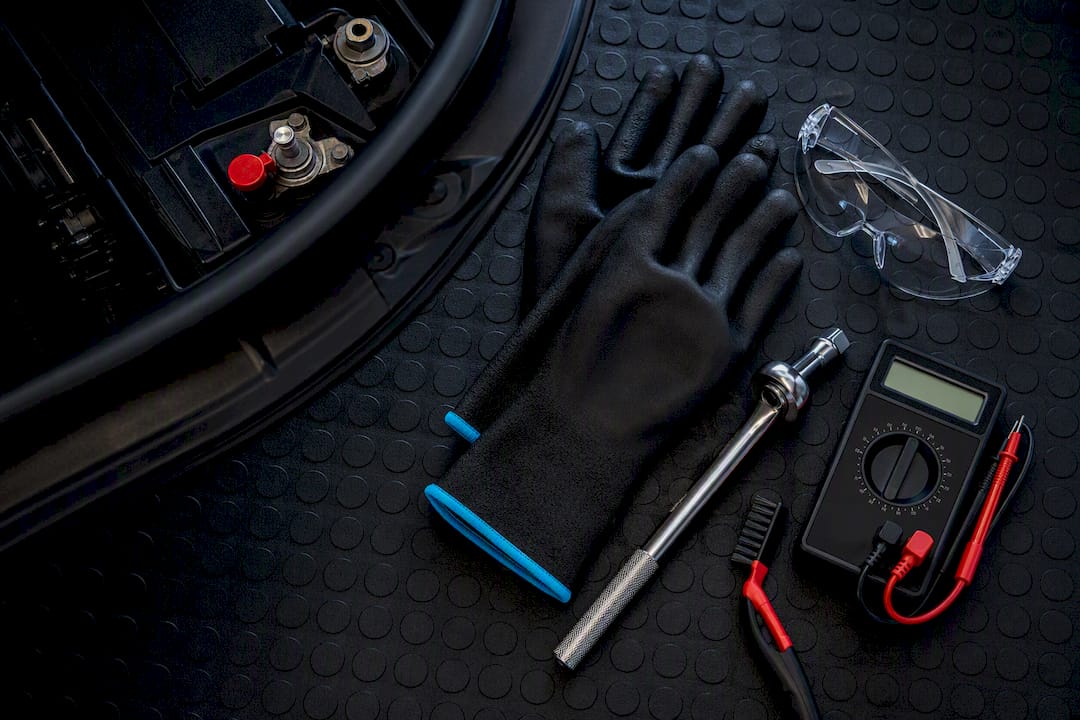
Gather these before you start:
- OEM-matched battery: correct chemistry, group size, CCA, and Ah rating
- Insulated wrenches and a torque reference for terminal and hold-down bolts
- A memory saver or secondary 12V power source to protect radio presets and adaptive settings
- A conductance tester, or a confirmed appointment with a shop that has one
- Terminal clamps, hold-down hardware, and basic lifting gear if the battery is heavy or awkwardly placed
Pro Tip: Photograph the wiring, terminal orientation, and any visible fuse box labels before you disconnect anything. It takes thirty seconds and saves real frustration if a clip or bracket looks unfamiliar on reassembly.
How Do You Actually Replace a Start-Stop Battery?
The physical steps aren’t complicated on paper. What makes a start-stop battery swap harder than the one you did on your first car is everything tied to it electronically.
- Locate the battery, checking under the hood first and the trunk, cowl, or rear seat area if it isn’t there.
- Connect a memory saver or note down radio presets, clock, and any driver-assist calibration settings.
- Disconnect the negative terminal first, then the positive.
- Remove the hold-down bracket and lift the old battery out.
- Set the new battery in place, secure the hold-down, and reconnect positive, then negative.
- Complete the battery registration or BMS reset before driving off.
VARTA documents as many as 28 individual steps involved in a full EFB or AGM replacement once you count electrical checks, programming, and safety procedures, which is why the company recommends a specialist workshop for anything beyond a simple under-hood swap. Vehicles with airbag control units near the battery tray, or systems requiring dealer-level registration tools, fall squarely into that category.
A quick, accessible swap with a diagnostic tool on hand can be done in under an hour. A trunk-mounted battery with a required dealer reset, or a car that throws fault codes without proper adaptation, can turn into a multi-hour job, sometimes stretched over a return trip to a shop.
Battery Registration and BMS Reset: How It Works and Why You Must Do It
Registration tells your vehicle’s ECU or battery management system the new battery’s capacity, chemistry, and install date. Without that update, the system keeps using the old battery’s profile, which Midtronics notes can disable start-stop, trigger overly conservative charging, or shorten the new battery’s usable life.
Skipping this step doesn’t cause a slow, vague decline. The effects tend to show up fast and are easy to notice:
- Start-stop simply stops engaging at traffic lights
- Warning lights appear on the dash within days
- Charging becomes noticeably more conservative, which can mean reduced fuel economy
A manual reset performed through a diagnostic tool, whether at a dealer or an independent shop, typically restores normal function immediately. Skip that step and the vehicle may need to “learn” the new battery through ordinary driving, a process that OBD Profi says can take one to three weeks, with start-stop staying disabled the whole time. If you can’t do the reset yourself, treat pro registration as a required line item on the job, not an optional upgrade.
How Do You Test a Start-Stop Battery to Confirm It’s Healthy?
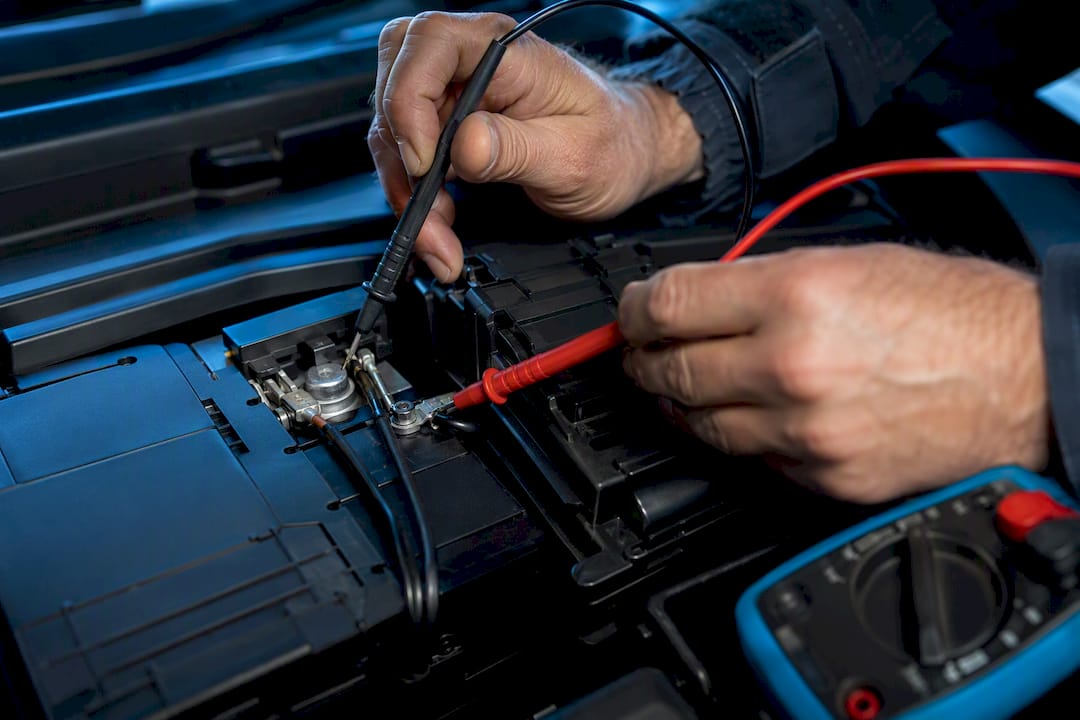
Resting voltage tells you almost nothing useful here. A battery can read a perfectly normal 12.6 volts and still be too degraded to handle the deep cycling a start-stop system demands.
Conductance testing measures actual usable capacity instead of a static number, which is why it’s the practical standard for checking these batteries in the field, per Midtronics’ own testing guidance. If you don’t own a conductance tester, most auto parts stores and shops will run one for a small fee or for free with a purchase.
- Check resting voltage as a first pass, but don’t trust it alone.
- Get a conductance test at install and again annually once the battery passes year three.
- Watch for slow cranking, dimming accessories at idle, or start-stop that hesitates before engaging. Those are early failure signs worth acting on before you’re stranded.
Costs, Warranties, and When Hiring a Pro Makes Financial Sense
Battery-only prices vary by chemistry: EFB units generally cost less than AGM, reflecting the deeper cycling capacity AGM provides. Fitted prices climb once labor and registration get added, and many providers now bundle ECU registration and post-install testing into that fitted price by default, based on how services like The Battery Centre structure their offerings.
- Battery-only cost depends heavily on group size, CCA rating, and AGM versus EFB chemistry.
- Fitted cost adds labor, registration, and often a post-install test as standard inclusions.
- Installing the wrong chemistry can void your battery warranty and, in some cases, affect vehicle warranty claims tied to the charging system.
- A pro is worth the money when access is difficult, when your vehicle requires dealer-only registration tools, or when you simply don’t have a conductance tester on hand.
When you request a quote, ask for the battery cost, labor, and registration listed as separate line items. That breakdown makes it easy to see exactly what you’re paying for.
Expert Tips and Common Mistakes From Donald at Banshee Batteries
Two decades in AGM and lithium battery design across powersports and marine applications teaches you the same lesson every time: batteries fail early because of what happens around the swap, not the battery itself.
- Buying flooded stock instead of EFB or AGM for a start-stop vehicle
- Skipping registration entirely, or assuming it happens automatically
- Trusting a voltage reading instead of a conductance test
- Loose hold-downs that let vibration crack internal plates over time
- Corroded or poorly torqued terminals that mimic a bad battery
Pro Tip: Clean terminal contacts with a wire brush before reconnecting, even on a brand-new battery. A dirty contact point can mimic a failing battery within weeks.
Check the battery registration guide and AGM charging guide for procedure specifics before you start.
When I’d DIY a Start-Stop Battery, and When I’d Book a Shop
My rubric is simple: skill, access, and registration ability all have to line up before I’ll tell someone to do this themselves. Miss one, and the math stops working in your favor.
I’ve seen owners save real money doing the physical swap themselves, then hand the car to a shop for a five-minute registration that prevented weeks of disabled start-stop and phantom fault codes. That combination, DIY labor plus professional registration, is often the smartest split. If your battery sits somewhere awkward, or your vehicle needs a dealer tool you don’t own, don’t force it. Book the shop for the whole job and spend your weekend elsewhere.
— Donald
Banshee Batteries: Compatible Replacements, Chargers, and Support
There are AGM start-stop replacements available that match OEM specs, so you’re not guessing on chemistry or CCA when you’re staring at a dead battery in a parking lot. Its 94R H7 AGM battery covers a common start-stop fitment with the 800 CCA output these systems actually need to handle repeated engine restarts.
Beyond the battery itself, Banshee backs every AGM purchase with a 4-year warranty, and its battery registration guide walks you through the reset process step by step, so you’re not left guessing whether your start-stop function will come back after install. Pair a new battery with a fully automatic 10A charger to keep it topped off between drives, especially if your vehicle sits for stretches at a time. Browse the AGM lineup, match your vehicle’s specs against the battery finder, and place your order directly through Bansheebatteries when you’re ready to replace.
Sources
- Maximizing the Lifespan of Start-Stop System Batteries | Midtronics
- Battery Replaced? Why Start/Stop or Charging Acts Weird (Battery Management Reset Explained) - OBD Profi
- Stop-Start Battery Replacement Sydney | Battery Specialists