


2–15+ Years: Deep Cycle Battery Lifespan for Marine & Powersports
Flooded and AGM batteries typically deliver 2 to 7 years or a few hundred to about 1,200 cycles, while LiFePO4 packs run 8 to 15 or more years across thousands of cycles. The single biggest lever you control is depth of discharge, paired with keeping the bank cool and charging it correctly. Get those three things right and almost any chemistry outlives its rated spec.
TL;DR:
- Deep-cycle batteries at higher depths of discharge, such as 80%, can have their cycle life halved compared to 50%, making shallow discharges critical for longevity.
- Maintaining a cool environment and avoiding high charging rates can significantly extend a battery’s lifespan, especially in heat-prone locations like engine bays.
- A proper matching of the charger profile to the chemistry, along with regular water addition for flooded batteries and BMS activation for lithium packs, ensures maximum cycle life.
- Lithium iron phosphate batteries can last 8 to 15 years with proper use, surpassing flooded and AGM batteries, which typically last between 3 and 7 years.
- Replacing batteries should be based on capacity, with replacement recommended at 70% capacity and above 80%, to avoid reliability issues.
Table of Contents
- Deep Cycle Battery Lifespan by Chemistry
- What Actually Shortens a Battery’s Life?
- How to Extend the Life of Your Deep Cycle Battery
- Signs a Deep Cycle Battery Needs Replacing
- Reading Warranty Claims the Right Way
- What I’d Actually Buy: A Straight Answer
- Long-Life Batteries Built for Powersports and Marine Use
- Sources
- FAQ
Deep Cycle Battery Lifespan by Chemistry
Manufacturer cycle-life numbers only mean something once you attach a depth of discharge (DoD) figure and translate it into a usage calendar. A number like “500 cycles” is nearly meaningless without knowing at what DoD.
Flooded lead-acid batteries, still common in older RVs and trolling setups, typically deliver 300 to 1,200 cycles at moderate DoD, depending on plate quality and how consistently they’re watered. Field reports from long-term owners back this up: well-maintained flooded batteries commonly reach 3 to 5 years, while neglected ones sulfate and fail in under two.
AGM batteries use the same lead-acid chemistry but a sealed, vibration-resistant design, which is why Bansheebatteries builds its powersport lines around AGM construction. AGM units generally sit better within the lead-acid cycle range and hold up well in vibration-heavy applications like ATVs and boats.
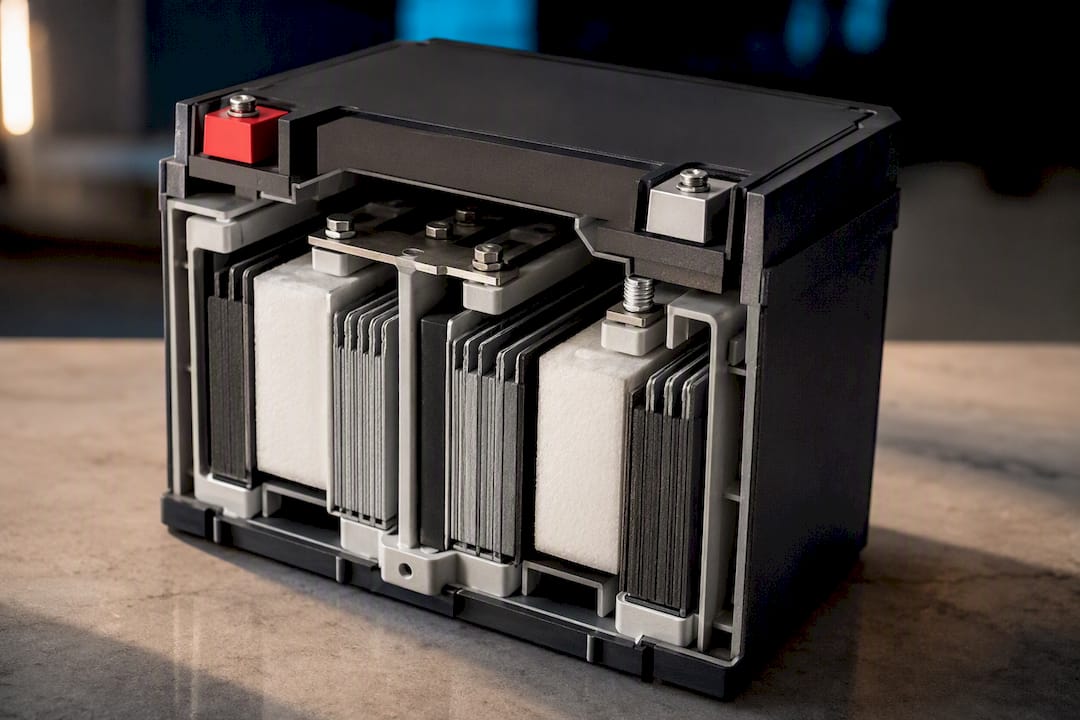
Gel batteries split the difference: sealed like AGM, slower to charge, and better suited to steady, low-current draws than to the punchy discharge cycles of a winch or a trolling motor.
LiFePO4 is in a different category entirely. These packs commonly deliver 3,000 to 6,000 cycles at 80% DoD, and some premium cells push past 7,000. Cycle that daily and you’re still looking at 8 to 15 years of service, even accounting for calendar aging.
A few maintenance factors shift these ranges dramatically in either direction:
- Regular watering on flooded cells prevents plate exposure and sulfation, which can otherwise cut life in half.
- Periodic equalization charging on flooded banks reverses early sulfation before it becomes permanent.
- A functioning battery management system (BMS) on LiFePO4 packs prevents the overcharge and over-discharge events that quietly erode cell balance.
- Recommended usable DoD varies by chemistry: 50% for flooded, 50 to 80% for AGM, and up to 80 to 100% for LiFePO4 without meaningful damage.
What Actually Shortens a Battery’s Life?
Four variables do almost all the damage: how deep you discharge it, how hot it runs, how fast you charge it, and how long it sits unused. Understanding the math behind each one changes how you use the battery day to day.
Depth of discharge has an outsized effect on total cycles. Running a lead-acid battery to 50% DoD instead of 80% can roughly double its cycle count, since shallower discharges put far less strain on the plates. The same principle applies to LiFePO4, just with a gentler curve.
Temperature is the other silent killer. As a general rule, life expectancy roughly halves for every 18°F (10°C) increase above a 77°F (25°C) reference point. A battery baking in an engine bay or an uninsulated marine compartment in July is aging on a completely different clock than one in a ventilated, shaded box.
Charge profile matters just as much as discharge habits:
- Charging too fast (a high C-rate) generates heat and stresses internal chemistry, even on lithium packs with built-in protection.
- Using a charger mismatched to the battery chemistry can cause undercharging or overcharging issues.
- LiFePO4 packs should not be charged below freezing; most BMS units prevent this automatically.
- Calendar aging on lithium chemistries runs roughly 1 to 3% capacity loss per year even sitting idle, so storage state of charge matters as much as usage.
Storing a lithium battery at 100% for months accelerates that calendar aging.
How to Extend the Life of Your Deep Cycle Battery
None of this requires special tools, just consistency. Here’s the order of priority if you want to get the most years out of whatever battery you’re running.
- Match your charger to your chemistry. Lead-acid needs bulk, absorption, and float stages; LiFePO4 needs a lithium-specific profile with a low-temperature cutoff.
- Water flooded batteries monthly during heavy use, and always after equalization charging, never before.
- Check terminals for corrosion every few weeks and clean with a baking soda solution for lead-acid or a dry brush for sealed types.
- Oversize your battery bank by 30 to 50% beyond your calculated daily draw, since shallower routine cycling is one of the cheapest ways to stretch calendar life.
- Install in a ventilated, shaded location away from engine heat or direct sun, and add insulation in extreme climates.
- Enable every BMS protection feature available, especially low-temperature charge cutoff and cell balancing, if your lithium battery has one built in.
Pro Tip: Before buying a bigger, pricier battery, try relocating the one you have to a cooler spot first. Temperature control often buys more lifespan than a chemistry upgrade does, and it costs nothing.
Signs a Deep Cycle Battery Needs Replacing
Watch for reduced run time between charges, recharge cycles that take noticeably longer than they used to, faster self-discharge when sitting idle, physical swelling on sealed cases, or one cell in a bank running hotter or weaker than the rest.
- 80% capacity or better: keep using it, no action needed.
- 70 to 80% capacity: start sourcing a replacement before you need it urgently.
- 60 to 70% capacity: budget and schedule replacement now.
- Below 60% capacity: replace it; performance and reliability are already compromised.
A simple capacity test, a full charge followed by a timed discharge at a known load, logged every few months, tells you exactly where a battery sits on that scale instead of guessing from symptoms alone.
Reading Warranty Claims the Right Way
Cycle-count warranties and calendar warranties measure different things: one promises a number of charge cycles, the other promises a fixed number of years regardless of use. Prorated warranties reduce your payout as the battery ages; full-replacement warranties don’t.
Certain AGM and lithium marine batteries on the market come with 4- to 5-year full-coverage warranties rather than prorated ones. That’s a useful benchmark. Before trusting any headline warranty number, check the fine print on DoD limits, temperature range, and whether improper installation voids coverage.
What I’d Actually Buy: A Straight Answer
For anything cycled daily, an RV, a trolling motor, an off-grid setup, LiFePO4’s cycle count and lighter total cost of ownership over a decade make it worth the upfront price. For a boat used three weekends a season, calendar aging matters more than cycle count, and a well-priced AGM often makes more financial sense. Either way, verify the actual cycle spec, read the warranty’s DoD and temperature conditions, and confirm your charger matches the chemistry before you buy.
— Donald
Long-Life Batteries Built for Powersports and Marine Use
If you’re tired of watching flooded batteries die every couple of seasons, Bansheebatteries builds AGM and LiFePO4 batteries specifically for the vibration, heat swings, and seasonal storage that powersports and marine setups put batteries through, backed by warranties that actually match how long the batteries are built to last.
The lineup includes lithium marine batteries built for trolling motors and off-grid marine electronics, backed by a 5-year warranty, and AGM powersport batteries backed by 4 years of coverage. If you run daily cycles on a boat, RV, or trolling motor, the 12V 100Ah LiFePO4 battery is sized for exactly that kind of repeated deep discharge without the capacity loss a flooded battery would show after a season. Riders and boat owners weighing AGM against flooded construction can also check the breakdown in Bansheebatteries’ AGM versus flooded comparison before choosing. Pick your application, check the battery finder on the site, and get a battery sized and warrantied for how you actually use it.
Sources
For deeper technical detail, Survipedia’s replacement planning guide covers temperature derating math, WattBuild’s chemistry comparison breaks down DoD by battery type, and Wikipedia’s deep-cycle battery overview explains construction differences. Call2Recycle covers safe handling of flooded cells, and VatrerPower’s guide breaks down long-term cost comparisons.
- Battery lifespan and replacement planning - Survipedia
- How long do deep cycle batteries last - WattBuild
- How Long Do Deep Cycle Batteries Last? Lifespan Guide - VatrerPower
FAQ
Can a Completely Dead Deep Cycle Battery Be Recharged?
Sometimes, but a battery drained to zero volts or left dead for weeks often suffers permanent sulfation (lead-acid) or cell damage (lithium) that a normal charge cycle can’t reverse. A specialized desulfation charger can sometimes revive a lead-acid battery caught early, but there’s no guarantee.
What Is a Downside of Using Deep Cycle Batteries?
Deep cycle batteries trade peak cranking power for sustained, steady output, so they’re a poor substitute for starting an engine and generally cost more upfront than standard automotive batteries, especially in LiFePO4 form.
How Do You Tell if a Deep Cycle Marine Battery Is Bad?
Look for noticeably shorter run time, a battery that won’t hold a charge overnight, visible case swelling, or a voltage reading that drops fast under a small load; any of these point to a battery near the end of its service life.
Should I Charge My Deep Cycle Battery After Every Use?
Yes, for lead-acid batteries, letting them sit partially discharged accelerates sulfation, so recharging promptly after use protects lifespan. LiFePO4 packs are far more tolerant of partial-state storage, but topping off after use is still good practice.