


LiFePO4 Powersports Batteries: Benefits Worth Knowing
LiFePO4 (Lithium Iron Phosphate) batteries are the strongest upgrade available for modern powersports vehicles. The benefits of LiFePO4 powersports batteries come down to a few hard facts: they last significantly more charge cycles than lead-acid, weigh substantially less, and hold a flatter voltage curve that keeps your fuel injectors and ignition running at full capacity until the battery is nearly depleted. Here is what that means in practice:
- Longer lifespan: 5–8 years of service life versus 2–3 years for lead-acid
- Lighter weight: 50–70% weight reduction improves handling and reduces overall vehicle mass
- Safer chemistry: extremely low risk of thermal runaway compared to other lithium types
- Flat voltage output: delivers over 13 volts consistently, supporting ECU, injectors, and ABS
- Faster charging: high charge acceptance means less downtime between rides
- Low self-discharge: roughly 1% over 45 days, so your bike starts after months in storage
- Virtually maintenance-free: no electrolyte refilling, no equalization charges
- Environmentally cleaner: no lead, no acid, no toxic gases during use
How LiFePO4 battery chemistry works
LiFePO4 uses an iron phosphate cathode instead of the cobalt or manganese compounds found in other lithium-ion chemistries like NMC (Nickel Manganese Cobalt). That iron phosphate structure is chemically stable at high temperatures, which is exactly why it does not overheat the way other lithium batteries can.
LiFePO4 is not some magical non-lithium technology. It is a lithium-ion chemistry that happens to be one of the safest and most thermally stable lithium-ion chemistries available. For marine applications, LiFePO4’s combination of safety, cycle life, charging acceptance, and cost is precisely why it has become the preferred lithium-ion chemistry afloat. — Marine How To
NMC batteries prioritize energy density, storing more energy per kilogram, which suits portable electronics and lightweight electric vehicles. LiFePO4 trades some of that density for stability, longer cycle life, and a wider operating temperature range. For a powersports or marine application where the battery sits in a vibrating, heat-exposed, sometimes salt-air environment, that trade is worth making. You can explore the chemistry differences in detail to see how the two compare side by side.
1. Extended cycle life that outlasts the competition
LiFePO4 batteries deliver substantially more charge cycles compared to lead-acid. At typical powersports usage, that translates to a significantly longer service life than conventional batteries. The math on replacement costs alone makes the higher upfront price look reasonable within the first replacement cycle.
Cycle life is the primary benefit, not weight savings. The electrochemical stability of the iron phosphate structure means the battery degrades slowly and predictably rather than dropping off a cliff after a few seasons of hard use.
2. Weight reduction that changes how your vehicle handles
LiFePO4 units are typically much lighter than equivalent lead-acid batteries. A conventional battery might weigh 3–5 kg; a LiFePO4 replacement often comes in under 1.5 kg. On a sport bike or a lightweight ATV, that difference shows up in handling balance and acceleration response.
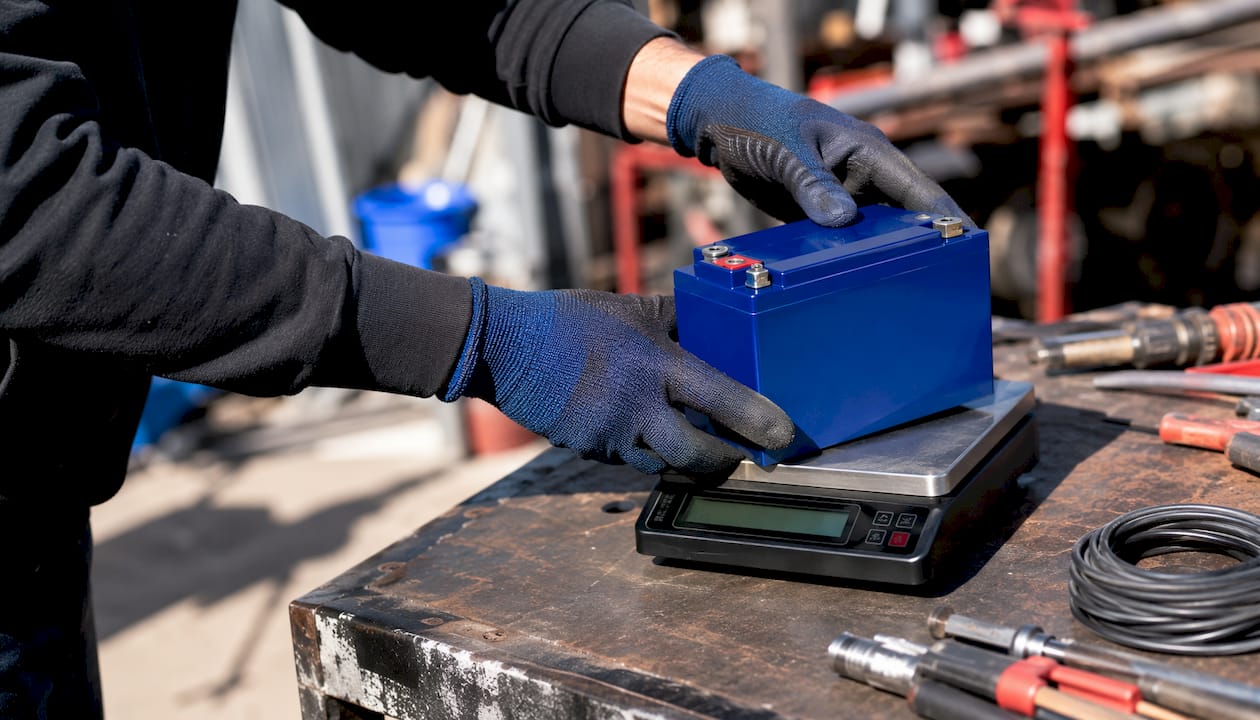
For racers and performance riders, switching to lithium is one of the easiest ways to shed five pounds without touching anything else on the vehicle.
3. Safety that holds up in demanding environments
LiFePO4’s thermal stability makes it far less prone to thermal runaway than cobalt-based lithium chemistries. In a powersports vehicle, the battery faces constant vibration, heat cycles, and sometimes rough handling. The iron phosphate structure stays chemically calm under those conditions. It will not self-ignite or self-combust if there is a failure, which matters a great deal in an enclosed engine bay or a boat hull.
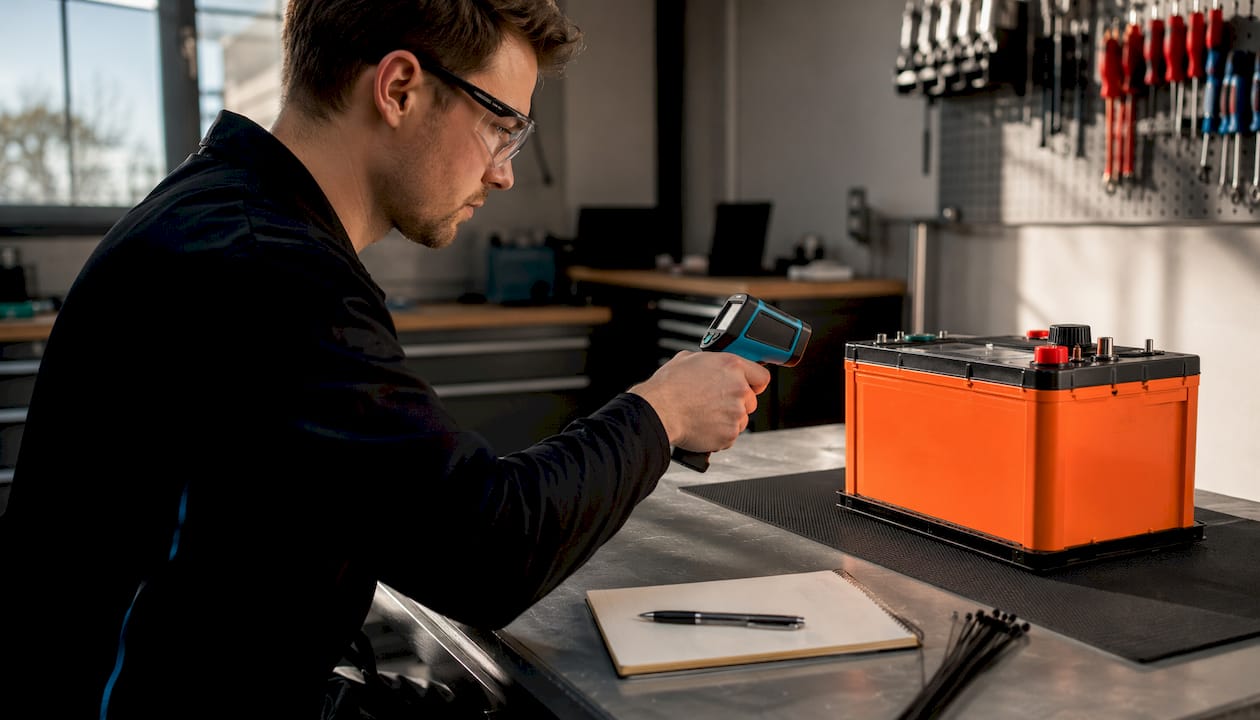
Pro Tip: Always verify that your LiFePO4 battery includes a built-in Battery Management System (BMS). Most failures in powersports lithium batteries occur in units without one. The BMS shuts the battery down before an overcharge situation can develop into a safety problem.
4. Flat voltage curve for consistent power delivery
A lead-acid battery’s voltage sags as it discharges. A LiFePO4 battery maintains a flat curve around 13 volts until it is nearly empty. Modern powersports electronics, including ECUs, fuel injectors, and ABS modules, need at least 12 volts to operate correctly. With lead-acid, you can hit that threshold well before the battery is fully discharged. With LiFePO4, you get full electrical performance right up to the end.
Performance riders value this consistency for engine tuning precision. A hotter, more consistent spark translates to easier starting and more reliable ignition timing.
5. Higher cranking amps per pound
LiFePO4 batteries supply higher cranking amps relative to their weight, which is critical for cold starts and high-compression engines. You get more burst energy from a smaller, lighter package than a conventional battery can provide. For ATVs, snowmobiles, and motorcycles that sit unused for weeks between rides, reliable cold cranking is not a luxury.
6. Cold weather resilience
LiFePO4 batteries maintain performance across a wider temperature range than lead-acid alternatives. Cold does affect internal resistance slightly, but the battery builds up to full cranking power quickly once a load is applied. Lead-acid batteries suffer a much steeper voltage drop in freezing conditions, which is why so many riders deal with sluggish starts in late fall.
Snowmobile and cold-climate ATV riders notice this difference most. The battery that starts reliably in January is the one worth paying more for upfront.
7. Low self-discharge during storage
LiFePO4 batteries lose a small fraction of stored energy per month, much less than lead-acid batteries, which lose considerably more depending on temperature. A lead-acid battery can lose 1% per day in hot weather. That self-discharge gap is why a LiFePO4-equipped bike will start after sitting in the garage all winter, while a lead-acid battery often needs a charge before the first spring ride. For proper LiFePO4 storage practices, simply disconnecting the negative terminal before a long storage period is usually all it takes.
8. Virtually maintenance-free operation
No electrolyte refilling. No equalization charges. No checking acid levels. LiFePO4 batteries use a sealed design that requires nothing from you between rides. The BMS handles cell balancing automatically. For riders who want to focus on riding rather than battery upkeep, this is a genuine quality-of-life improvement over flooded lead-acid batteries.
9. Environmental advantages
LiFePO4 batteries contain no lead and no sulfuric acid. They produce no toxic gases during normal use, and iron and phosphate are far more abundant and less environmentally damaging to source than the cobalt used in other lithium chemistries. Disposal is cleaner, and the longer service life means fewer batteries end up in landfills over a decade of ownership.
10. Total cost of ownership favors LiFePO4
The upfront cost is higher, but the lifetime math works out. Fewer replacements, zero maintenance costs, and no equalization charging equipment add up. Over a 6–8 year period, the total cost of owning a LiFePO4 battery is typically lower than cycling through two or three lead-acid replacements. The AGM vs. LiFePO4 comparison breaks down where each chemistry makes financial sense.
11. Installation and charging compatibility
Switching to LiFePO4 requires a compatible charger. Most standard smart chargers are calibrated for lead-acid voltage profiles and will not charge a lithium battery correctly. You need a charger with an explicit LiFePO4 profile. Older powersports vehicles may also need an alternator compatibility check before switching, since a standard alternator can overcharge a lithium bank during long bulk-charge sessions.
IP ratings on the battery enclosure matter too, especially for marine and off-road use. A well-sealed case protects the BMS and cells from salt air, mud, and moisture, which are the primary causes of premature failure in harsh environments.
Expert perspectives on LiFePO4 in marine and powersports use
Marine experts consistently rank LiFePO4 as the preferred lithium-ion chemistry for recreational vessels, citing thermal stability and safety as the deciding factors. The same properties that make it the go-to for marine house banks apply directly to powersports: vibration resistance, wide temperature tolerance, and a BMS that protects against overcharge and over-discharge.
| Feature | LiFePO4 | Lead-Acid |
|---|---|---|
| Cycle life | 5–8 years | 2–3 years |
| Service life | 5–8 years | 2–3 years |
| Weight | 50–70% lighter | Heavier baseline |
| Self-discharge (monthly) | 1–2% | 50–70% |
| Maintenance | None required | Periodic electrolyte refill |
| Thermal runaway risk | Very low | Low (but acid hazard) |
| Charger compatibility | Requires LiFePO4 profile | Standard charger works |
The BMS is what separates a quality LiFePO4 battery from a liability. It manages cell balancing, prevents overcharge, and shuts the battery down if temperature or voltage exceeds safe limits. For powersports use, where charging systems vary widely between older and newer vehicles, the BMS is the safety net that makes the chemistry practical.
Key Takeaways
LiFePO4 batteries deliver substantially more charge cycles, weigh significantly less than lead-acid, and maintain a flat voltage curve that keeps modern powersports electronics running at full capacity.
| Point | Details |
|---|---|
| Cycle life advantage | LiFePO4 lasts 5–8 years versus 300–500 for lead-acid, reducing replacement frequency. |
| Weight and handling | 50–70% lighter than lead-acid, improving balance and maneuverability on sport bikes and ATVs. |
| Storage reliability | Self-discharge of only 1–2% per month means the battery starts reliably after months of storage. |
| Safety and BMS | Built-in BMS prevents overcharge and thermal runaway; always verify BMS is included before buying. |
| Bansheebatteries option | Bansheebatteries offers LiFePO4 powersports and marine batteries with a 5-year warranty on lithium marine units. |
Bansheebatteries has the right LiFePO4 battery for your ride
If you have spent the last 20 minutes reading about cycle life, voltage curves, and BMS requirements, you already know what to look for. Bansheebatteries has been building LiFePO4 batteries specifically for powersports and marine applications for over 20 years, and the warranty reflects that confidence: 5 years on lithium marine batteries, backed by expert guidance to match you with the right unit for your vehicle.
The lineup covers everything from lightweight motorcycle starters to high-capacity deep-cycle marine batteries. Every unit ships with a built-in BMS, sealed against moisture and vibration, and ready for the conditions that kill lesser batteries. Browse the full LiFePO4 powersports battery collection or check out the lithium marine battery range if you run a boat alongside your powersports gear. When you are ready to stop replacing batteries every two years, Bansheebatteries is the straightforward next step.